Graphic Storytelling with Feminist Leaders

Nagarkot, Nepal · August 2026

On the first morning, I asked a room full of feminist leaders to fold a sheet of paper. It was the first step toward making their own graphic memoirs.

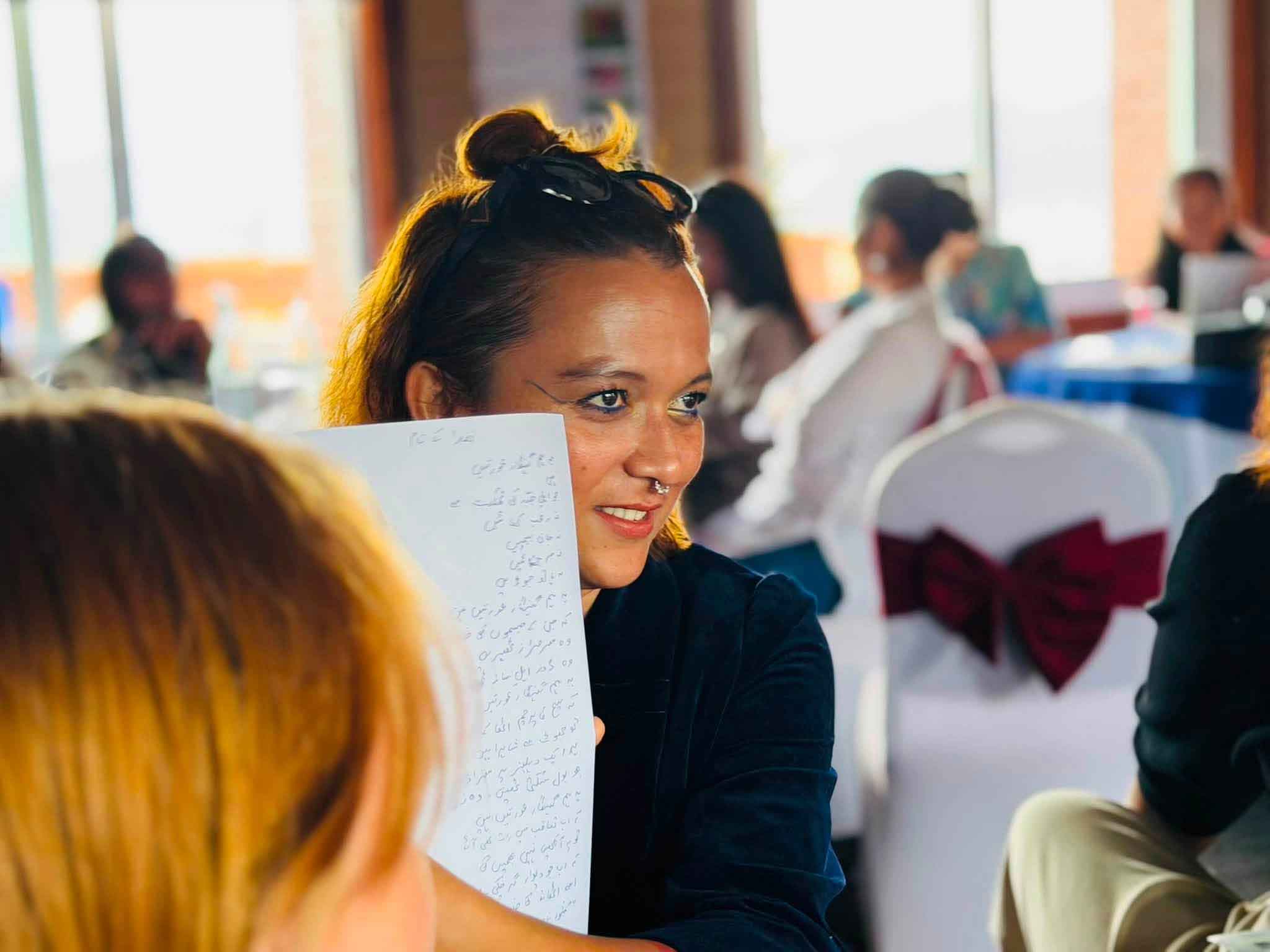
It sounded simple, but these are people who lead campaigns, run shelters, sit beside survivors and hold communities together. They are used to being the ones who guide, speak and organise. So when I asked them to draw and unpack their emotions, the honest reaction in the room was a quiet ‘why?’ Many of them hadn’t held a pencil since school.

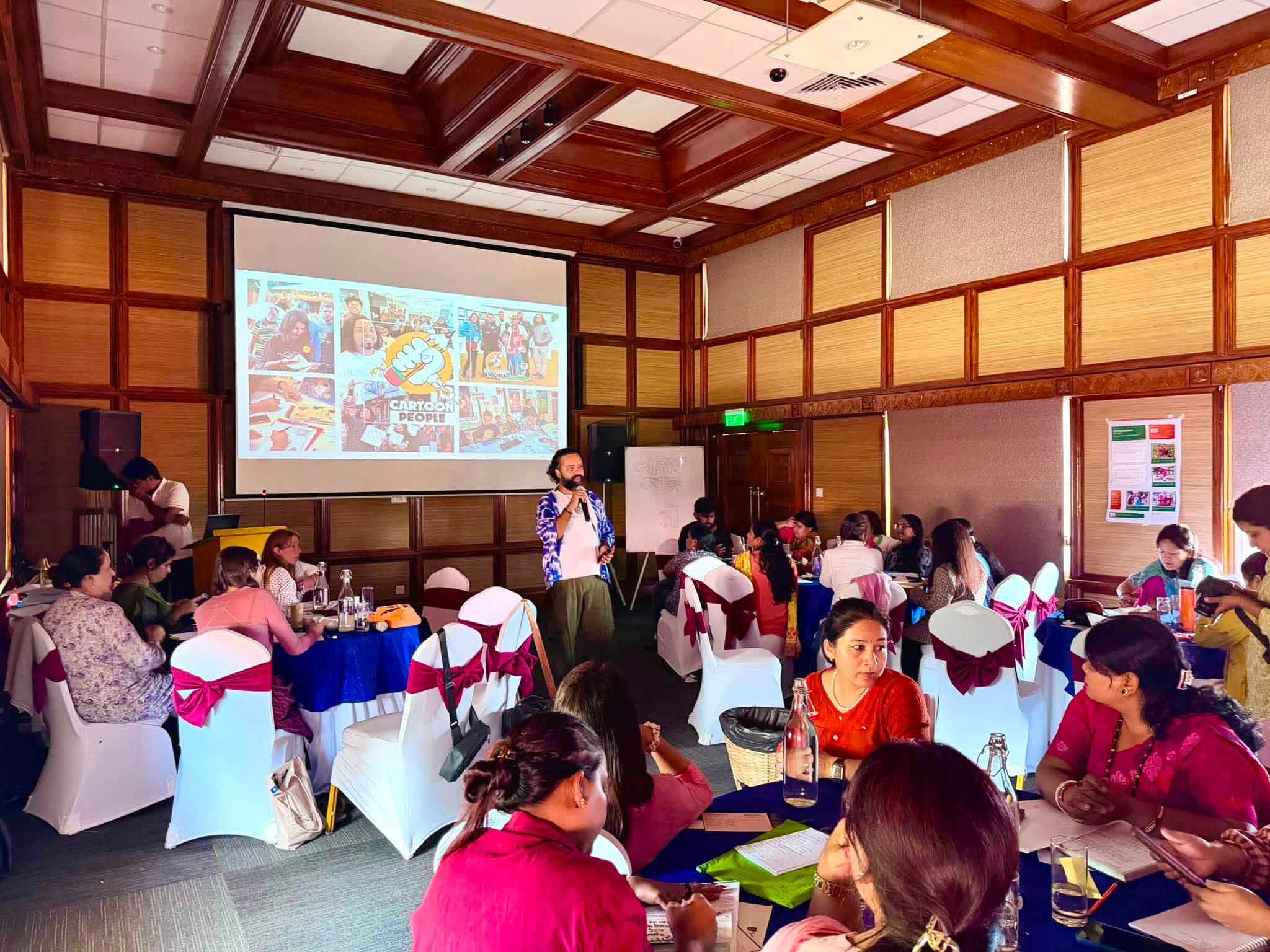
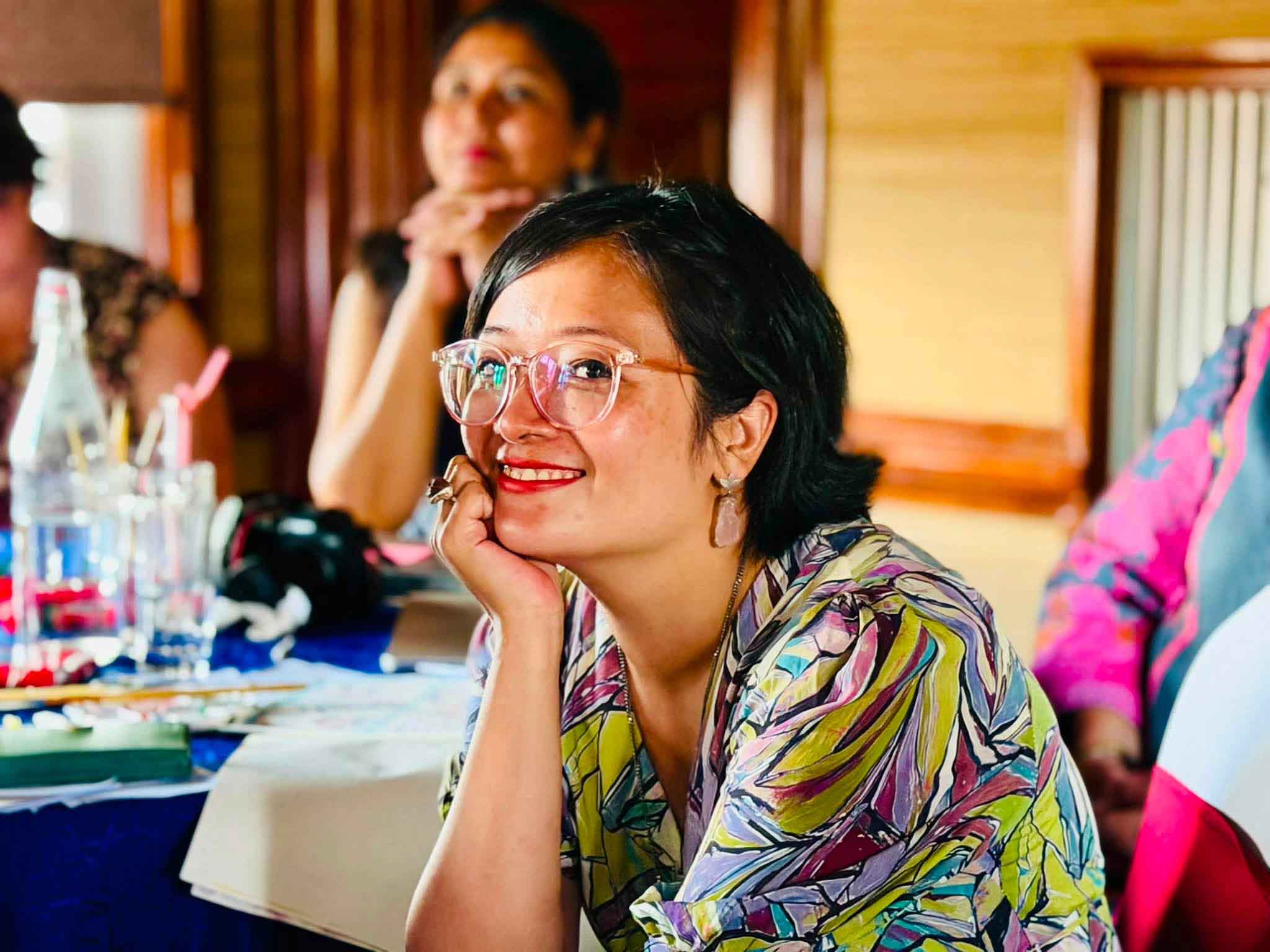
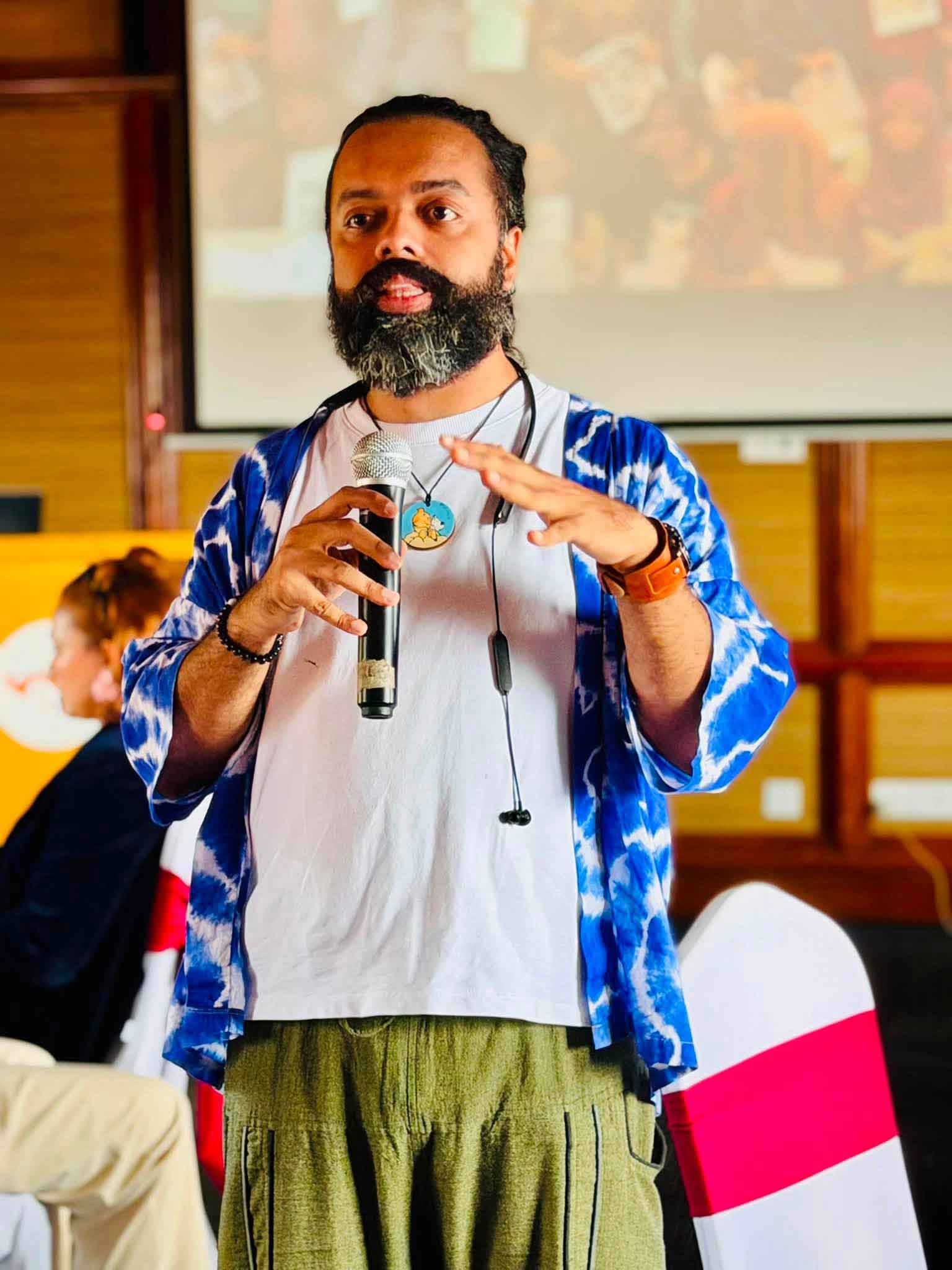
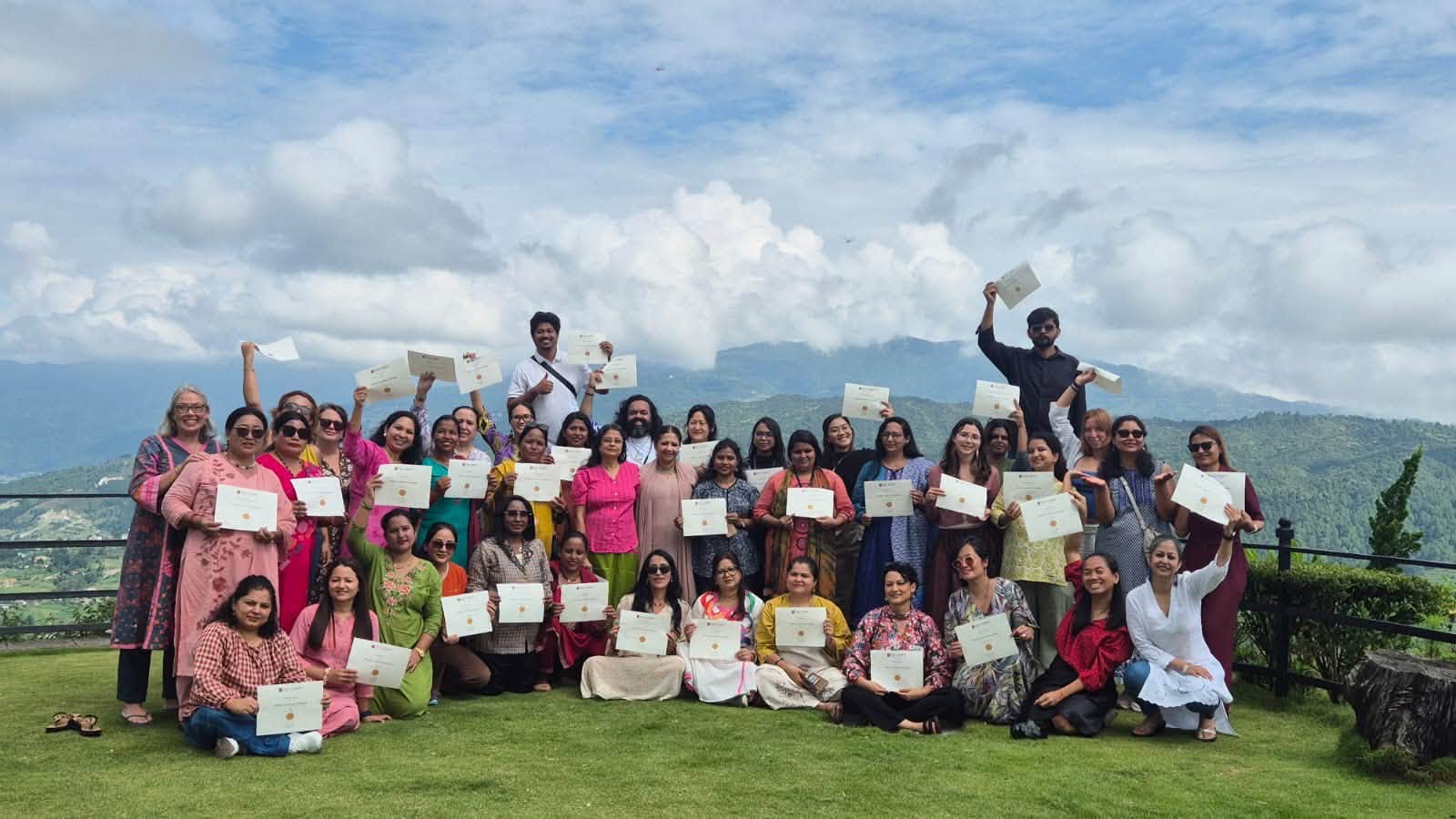
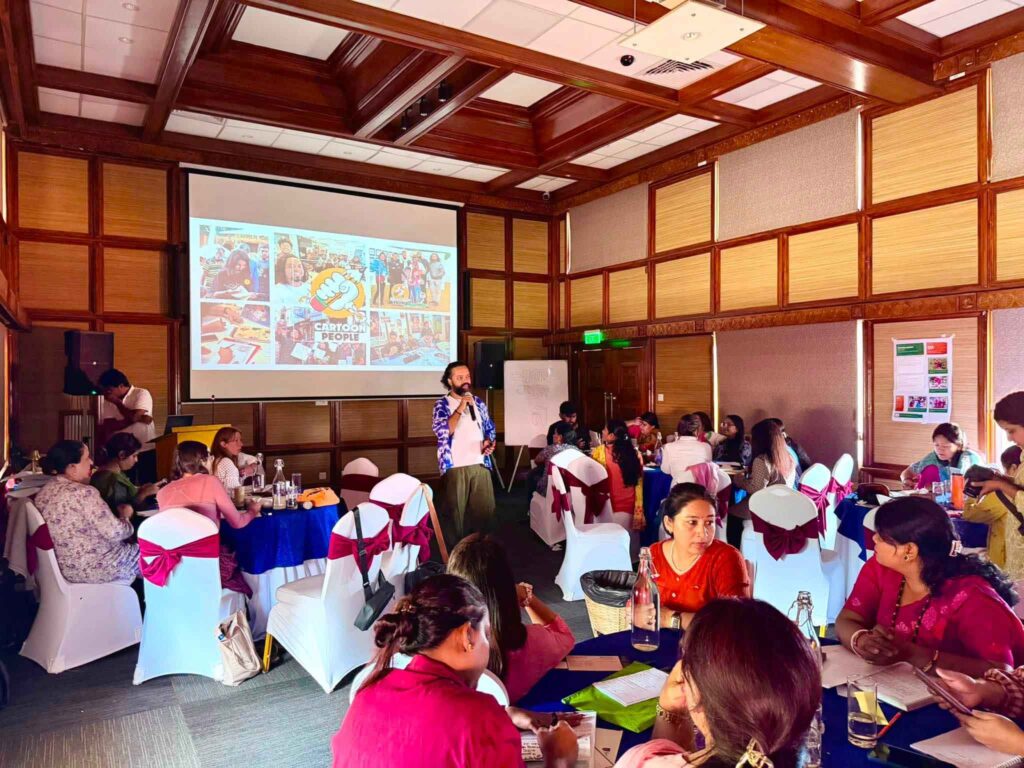
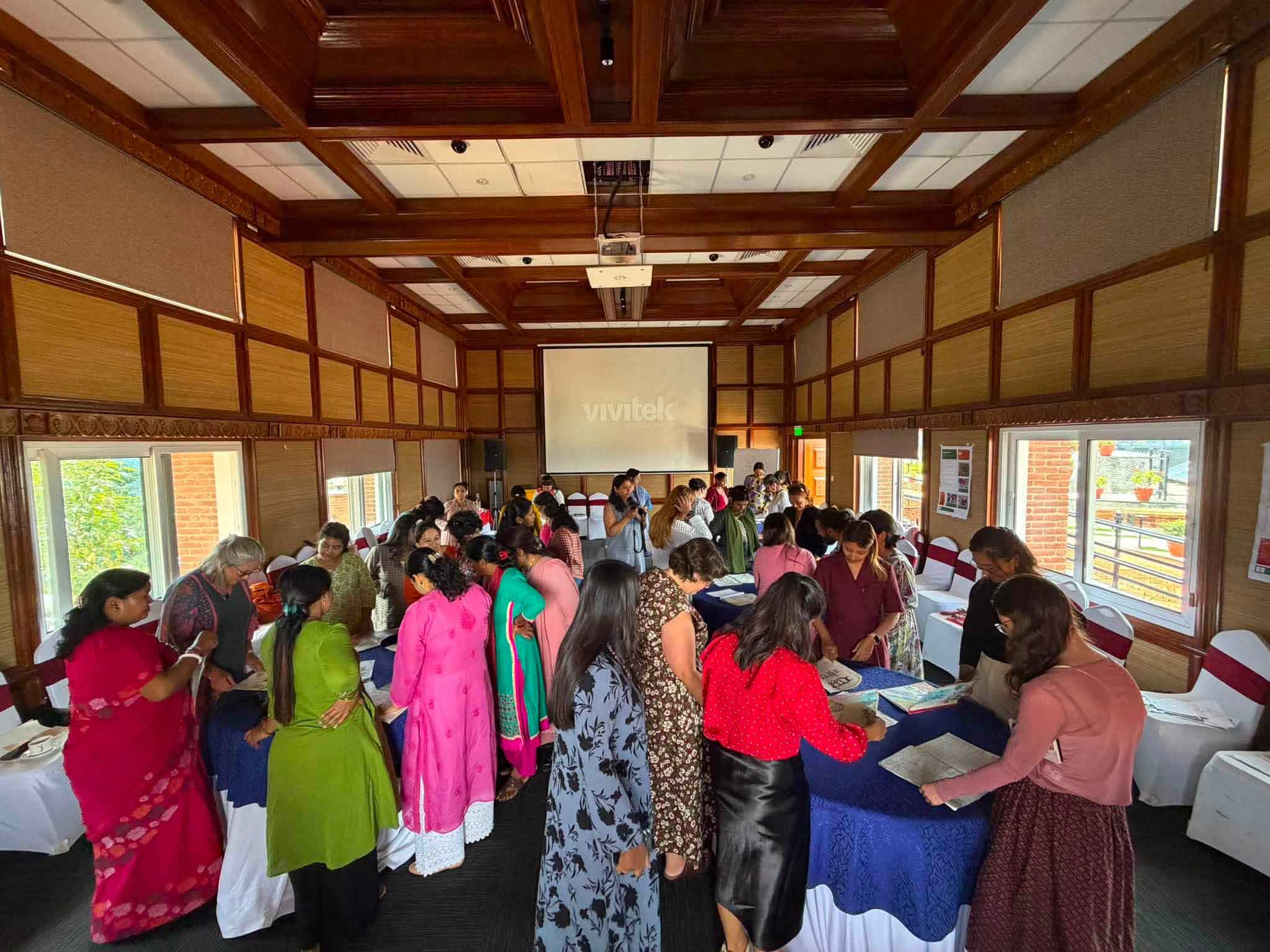
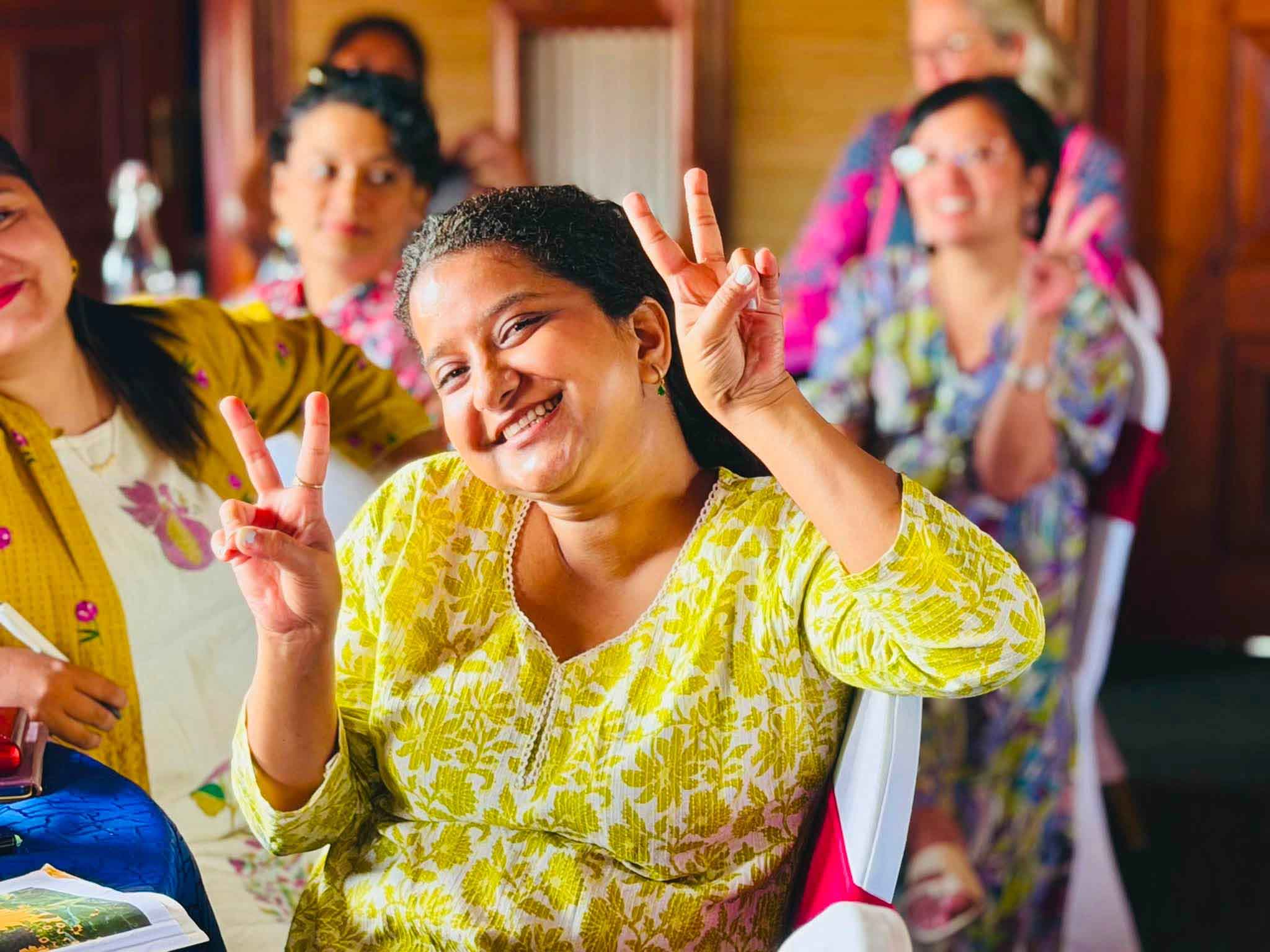
I was there because the Coady Institute at St. Francis Xavier University had invited me to the Feminist Leadership Convening, a week in the hills of Nagarkot. Around 40 incredible feminist leaders joined from Canada, Sri Lanka, Nepal, Bangladesh, India, Pakistan, Burma, Philippines and Cambodia.

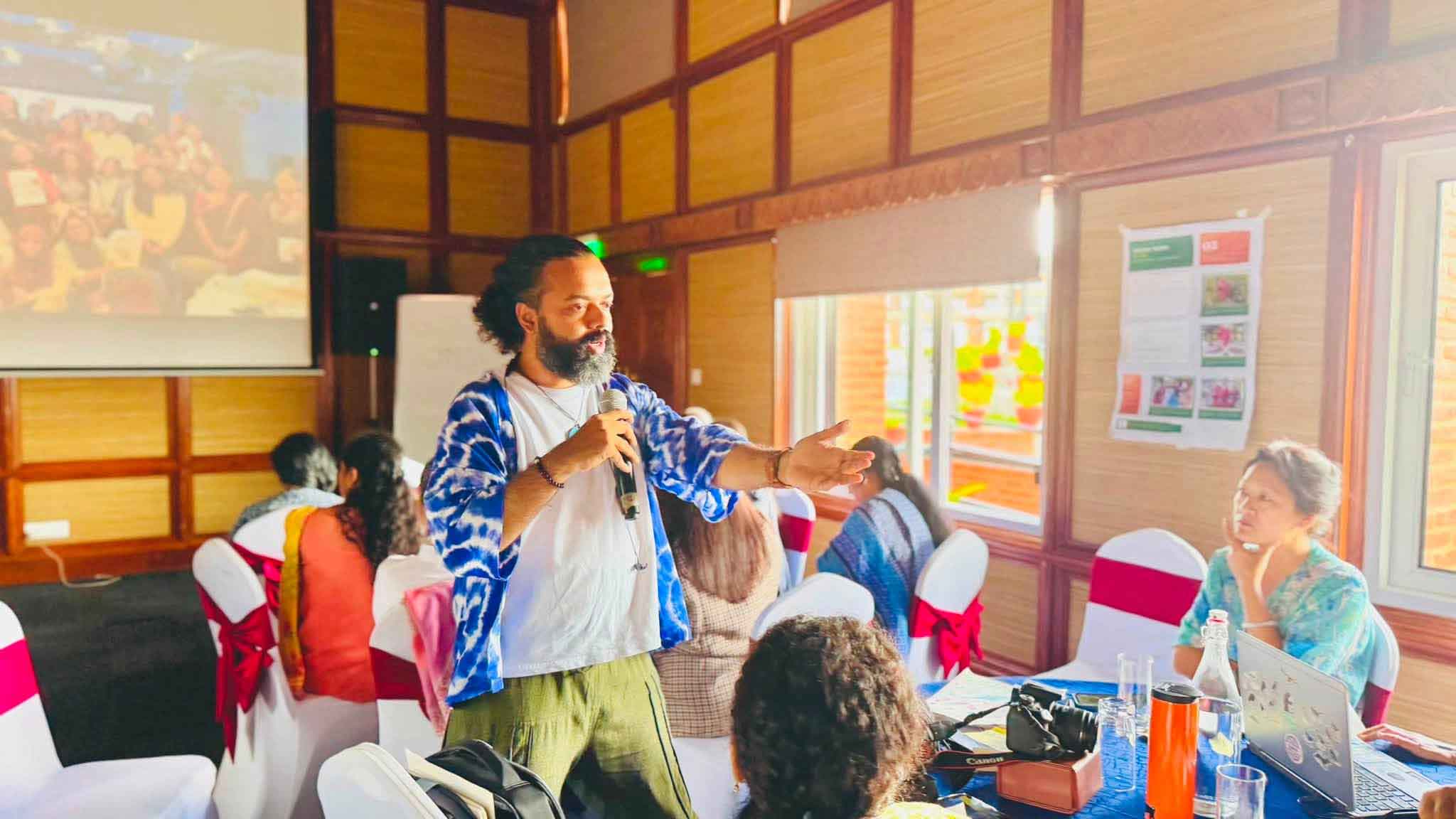
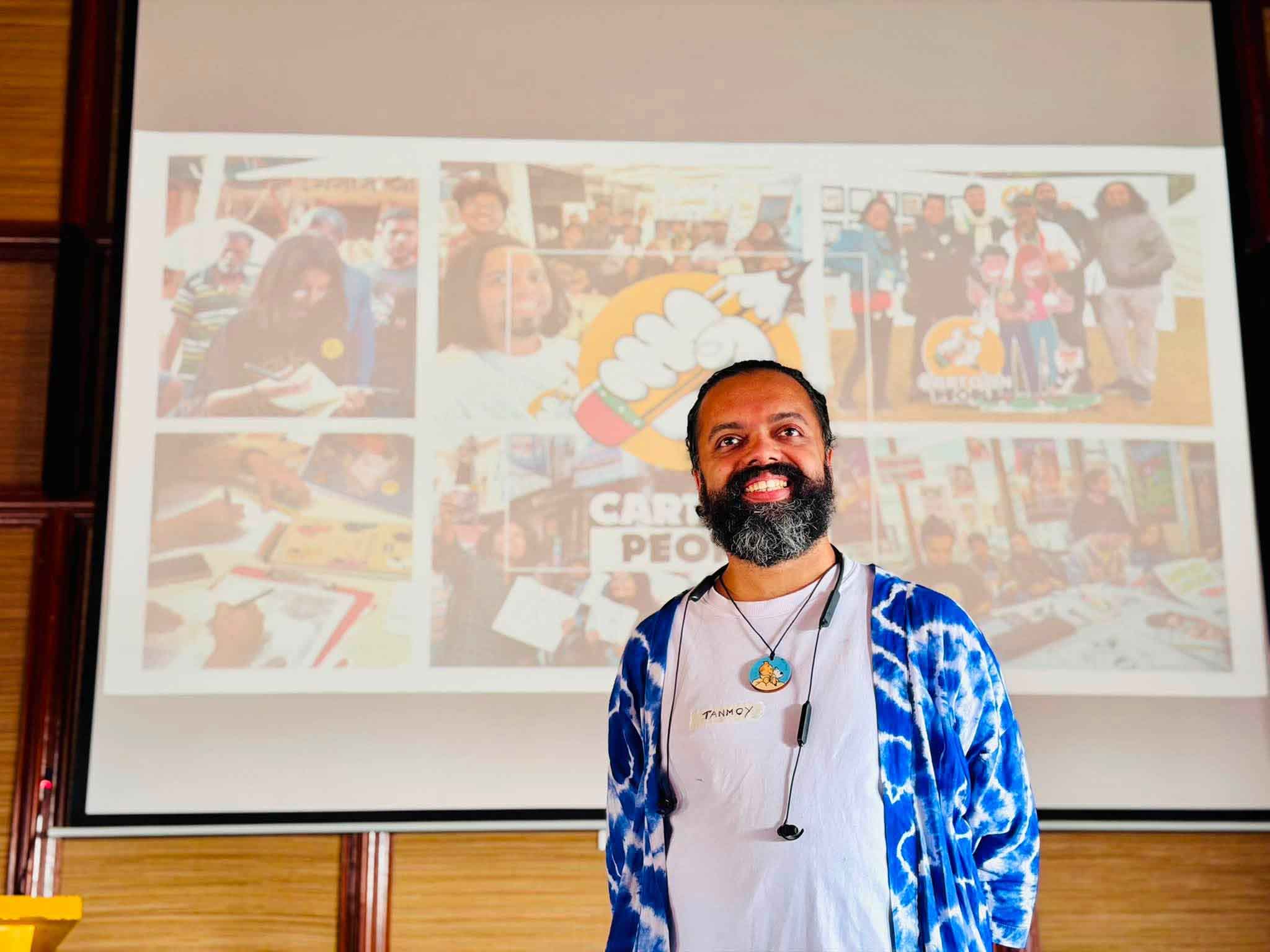
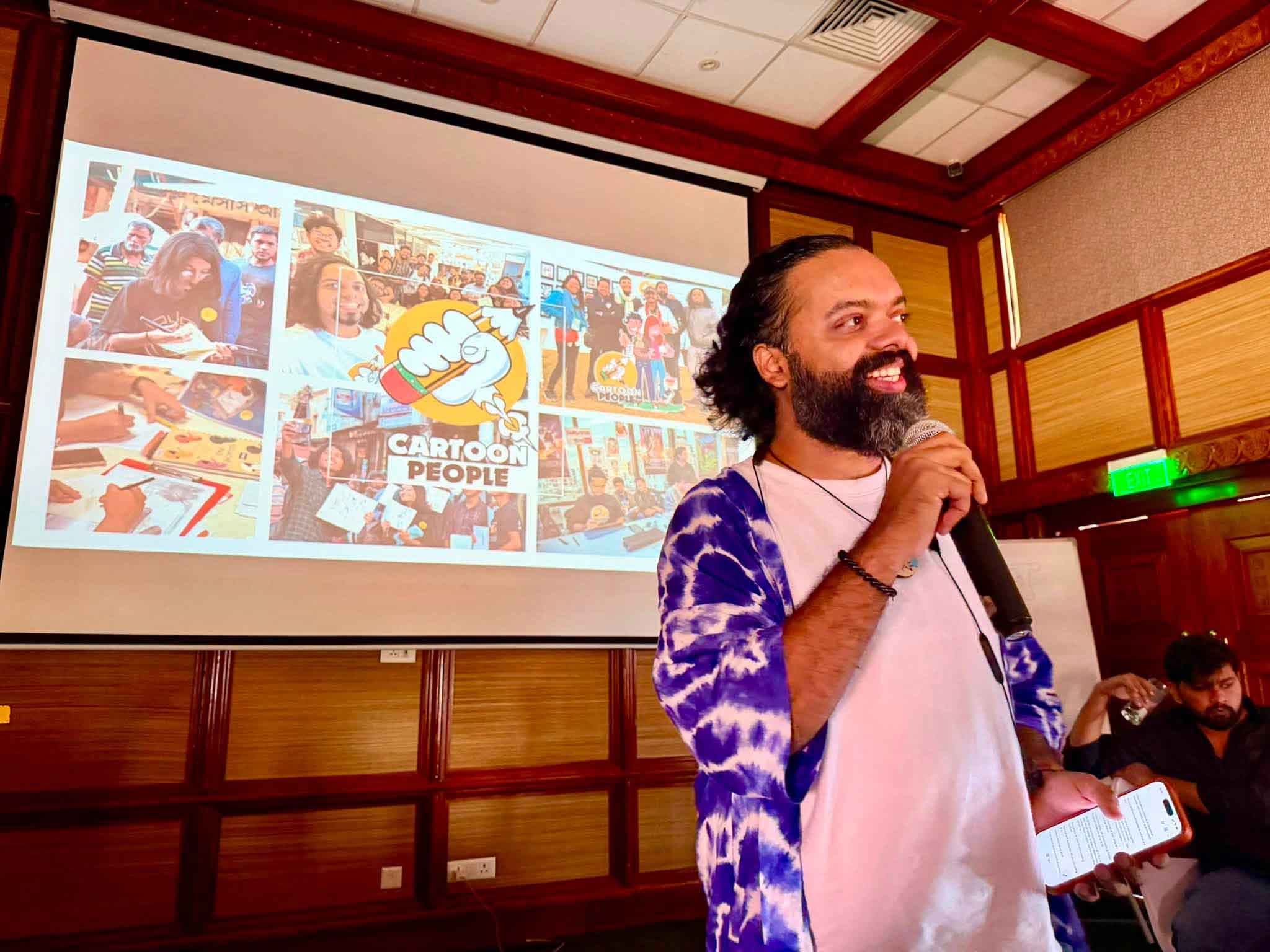
Lisa Faye, who brought this gathering together, gave me a slot and a question: what can a cartoonist offer a room of feminist leaders? I tried to answer with a four-day workshop called ‘Telling our Stories’ .

.

The idea

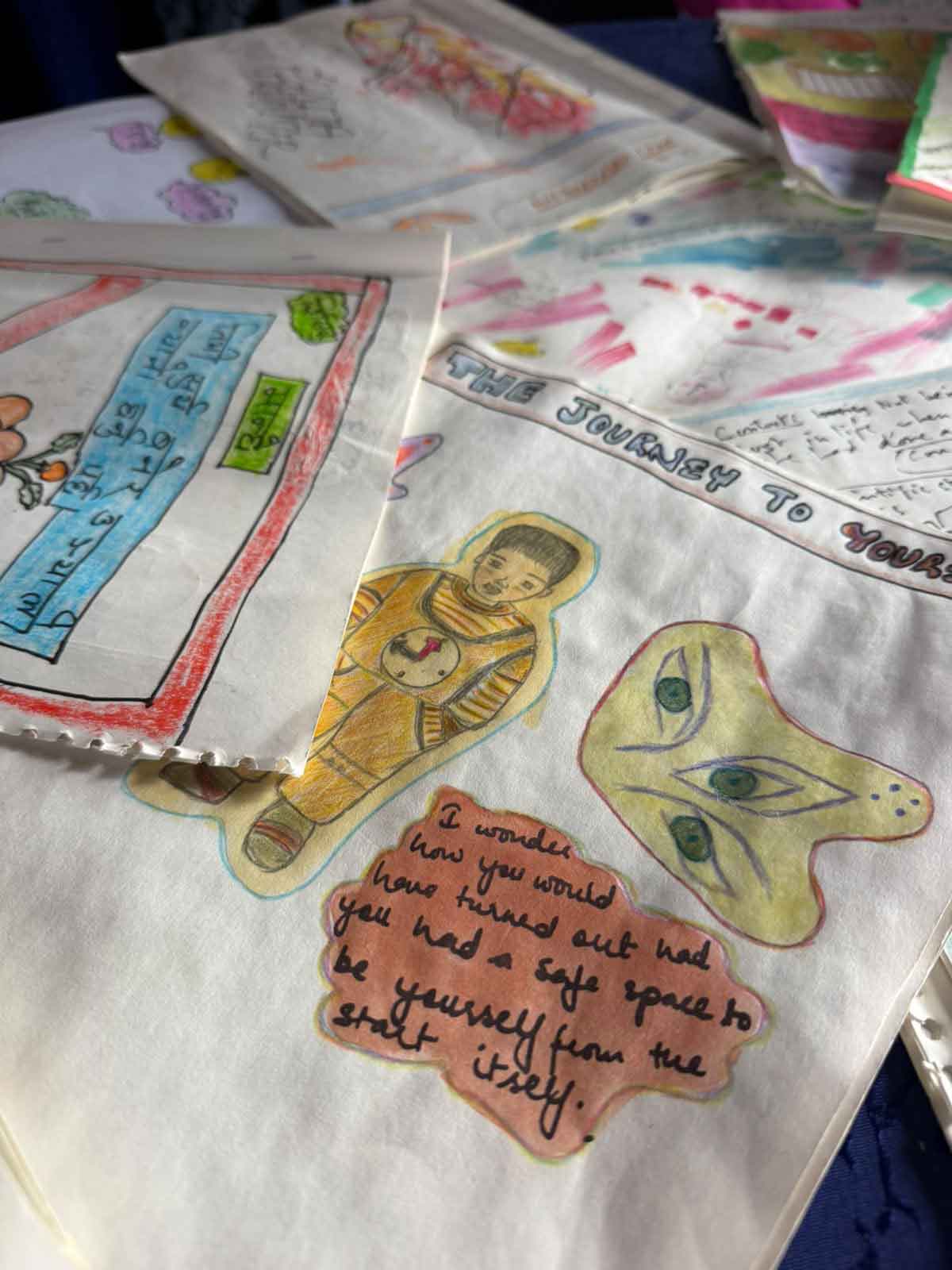
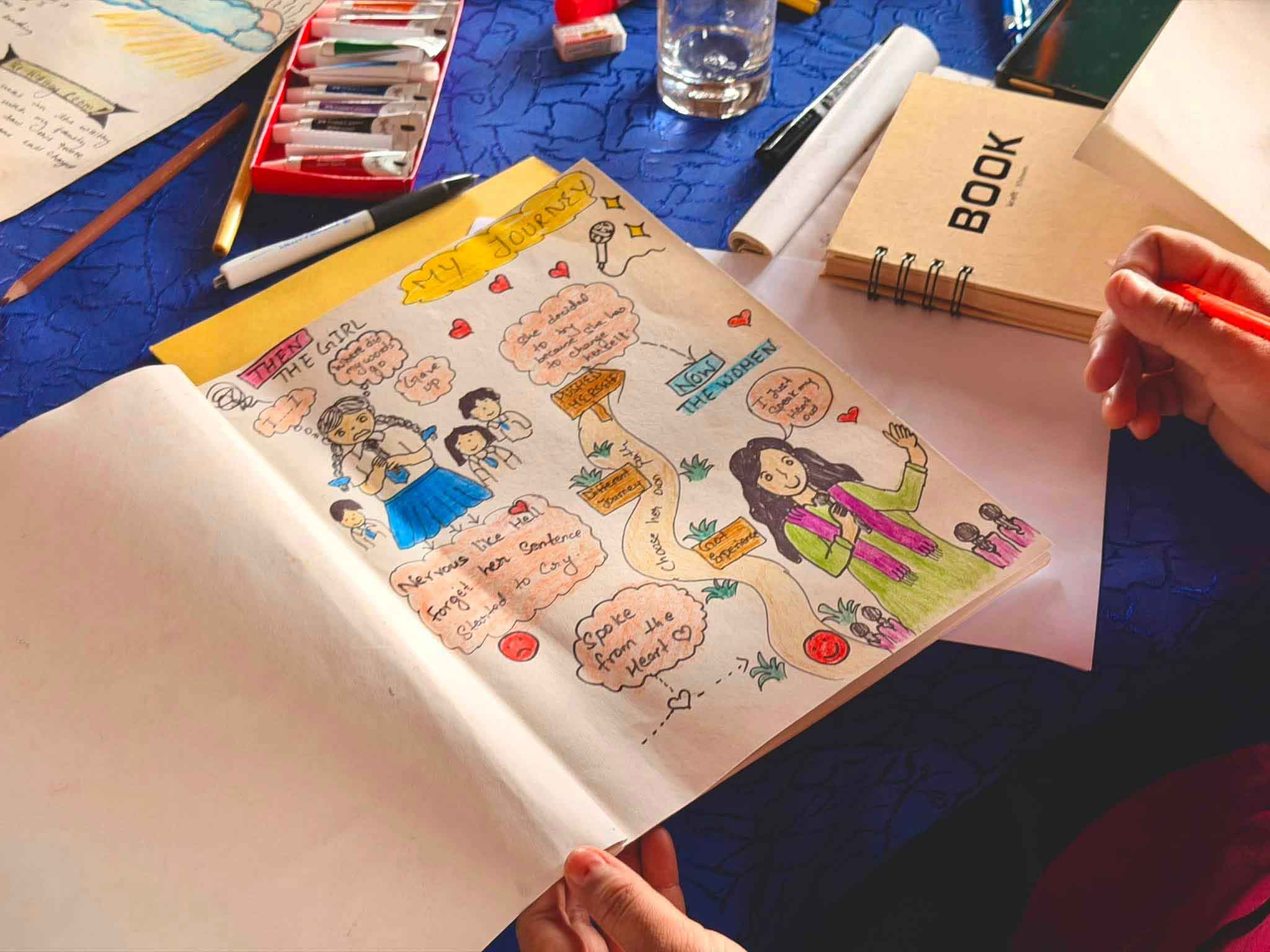
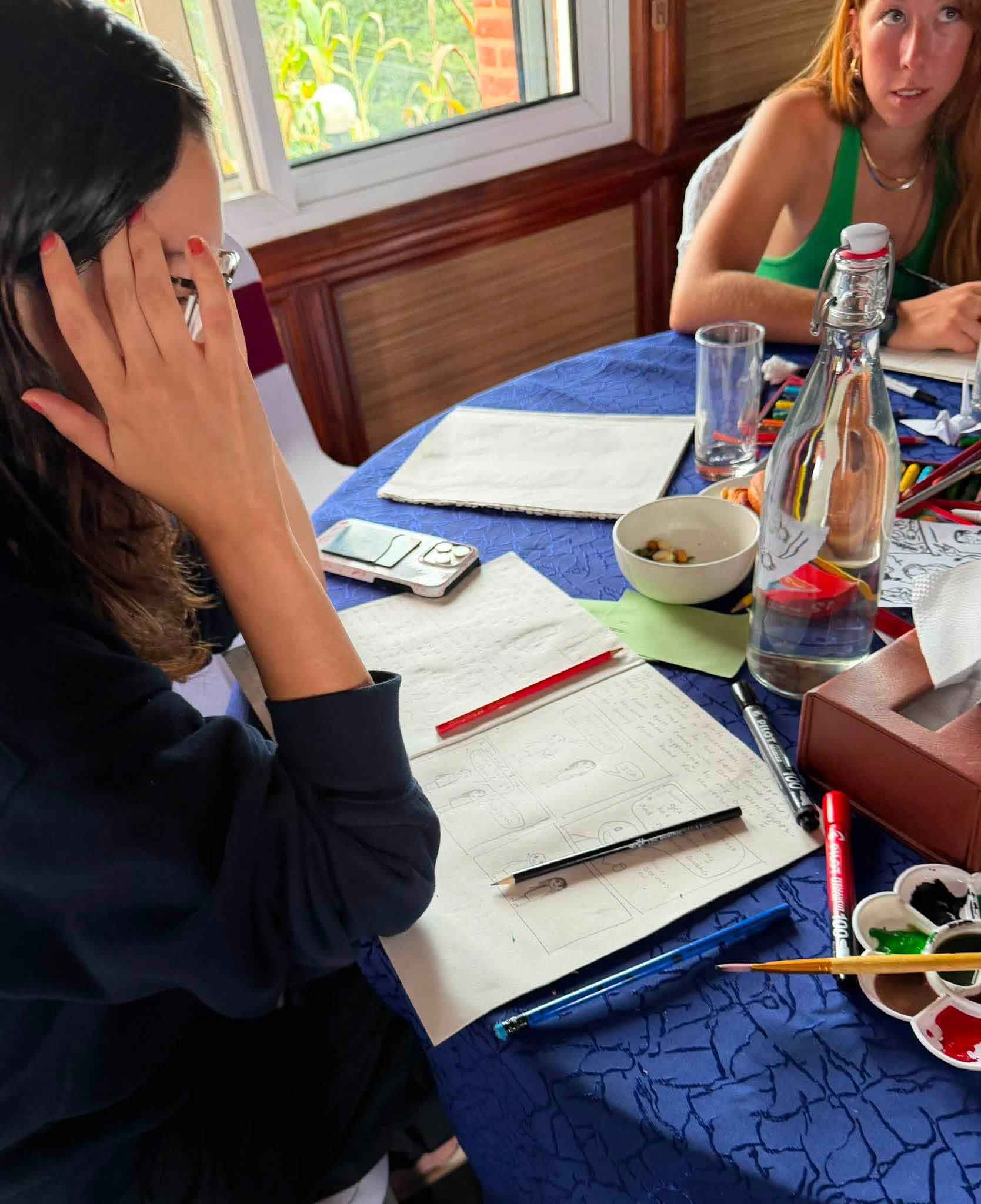
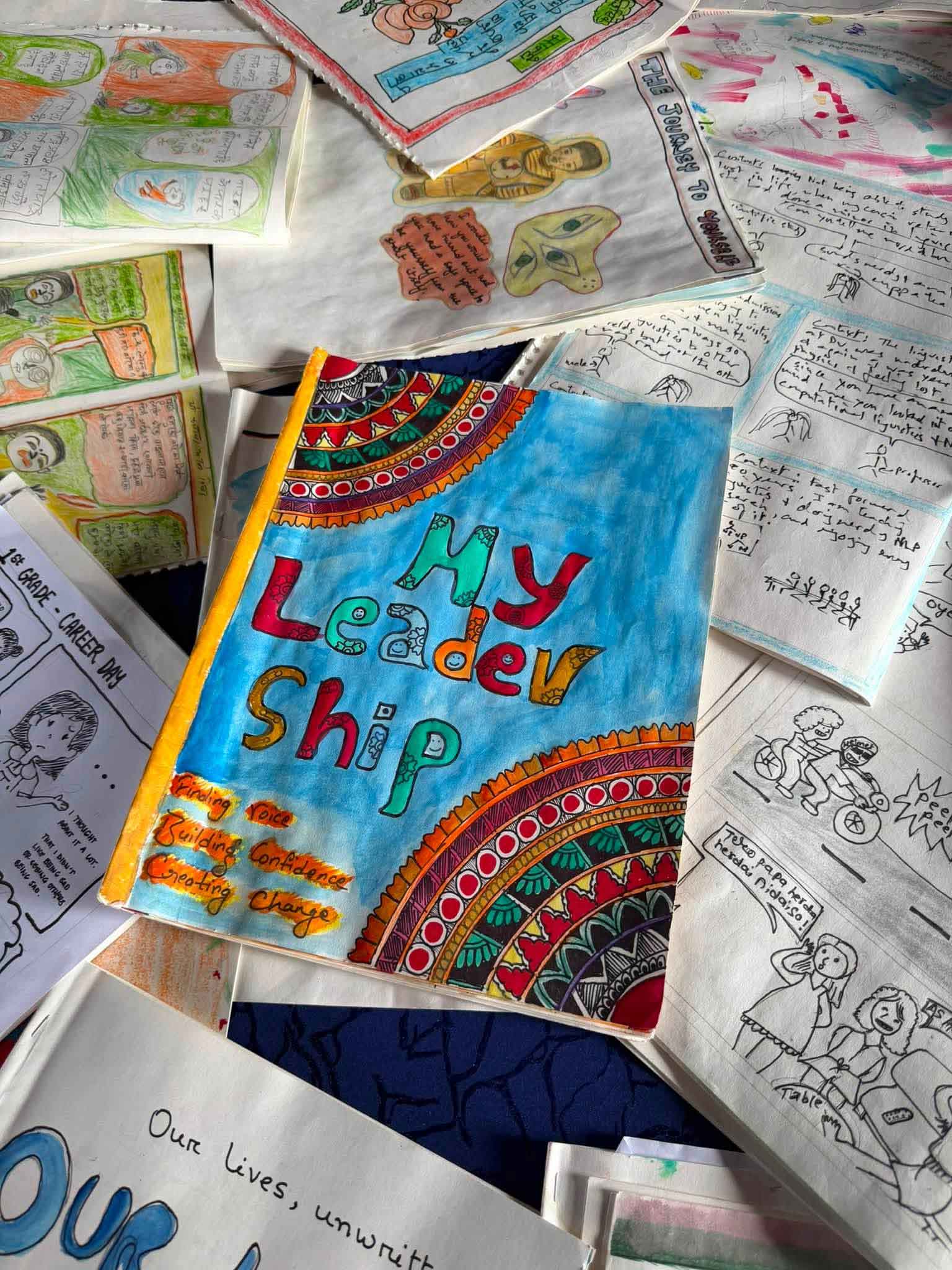
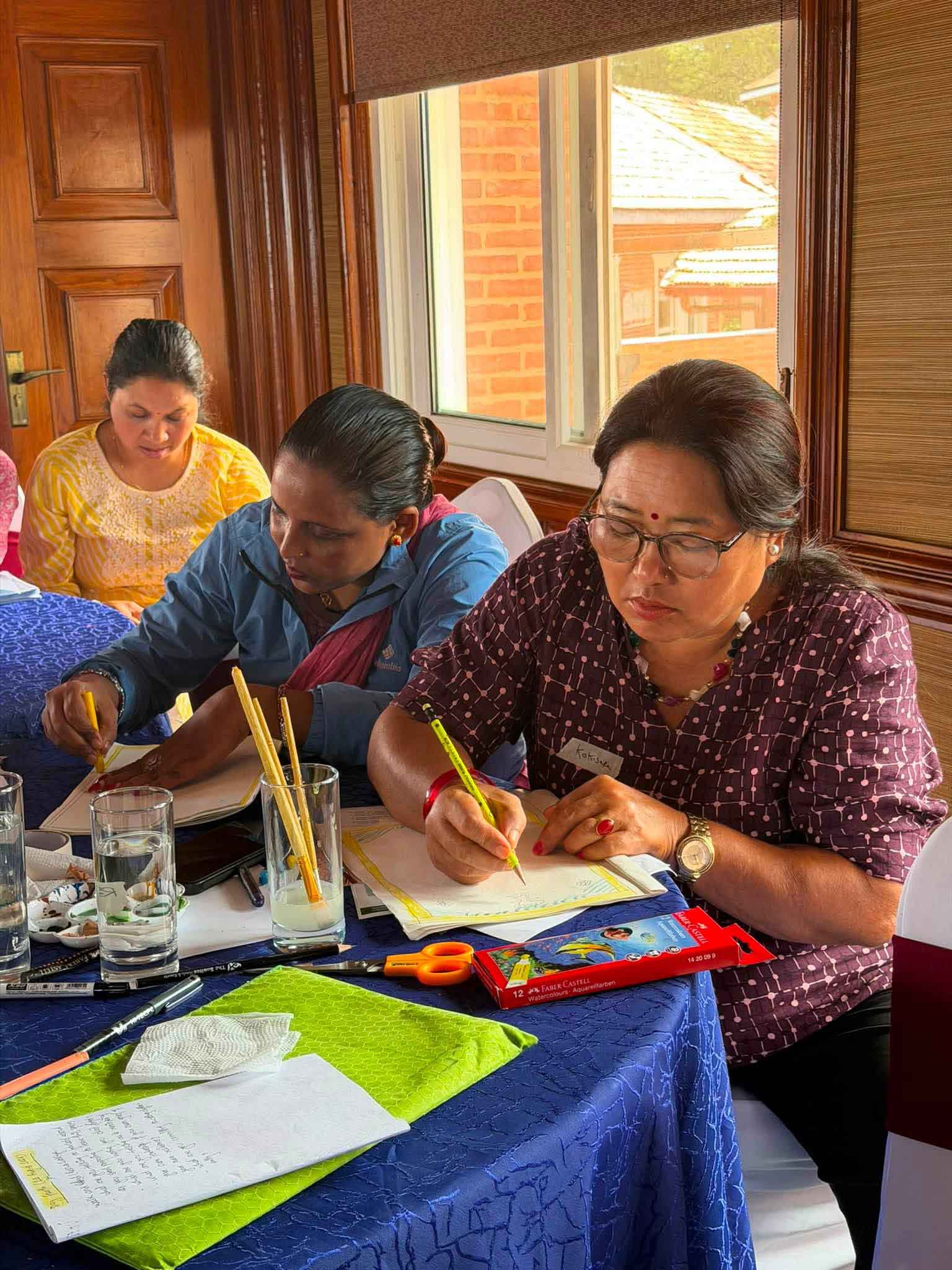
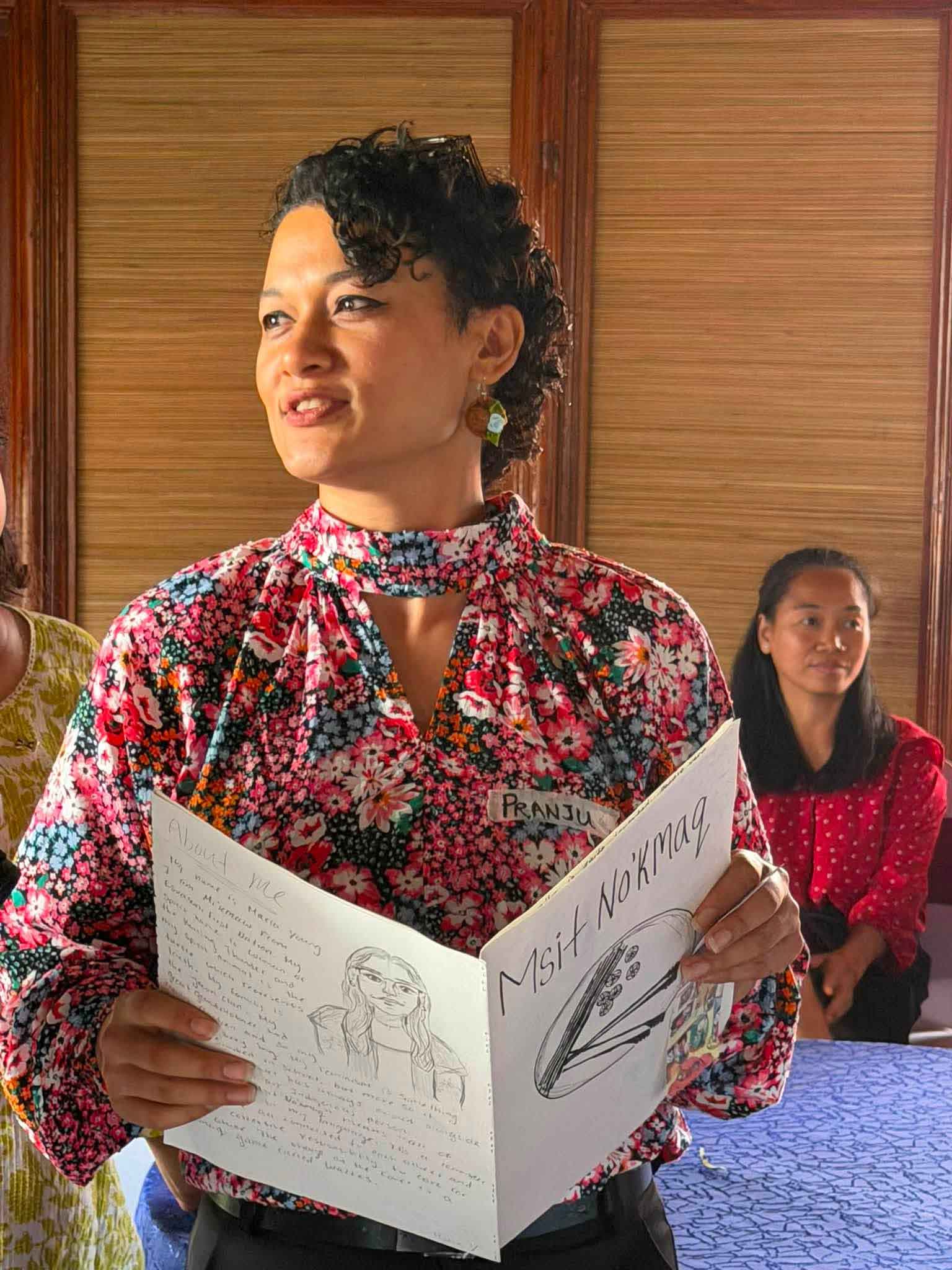
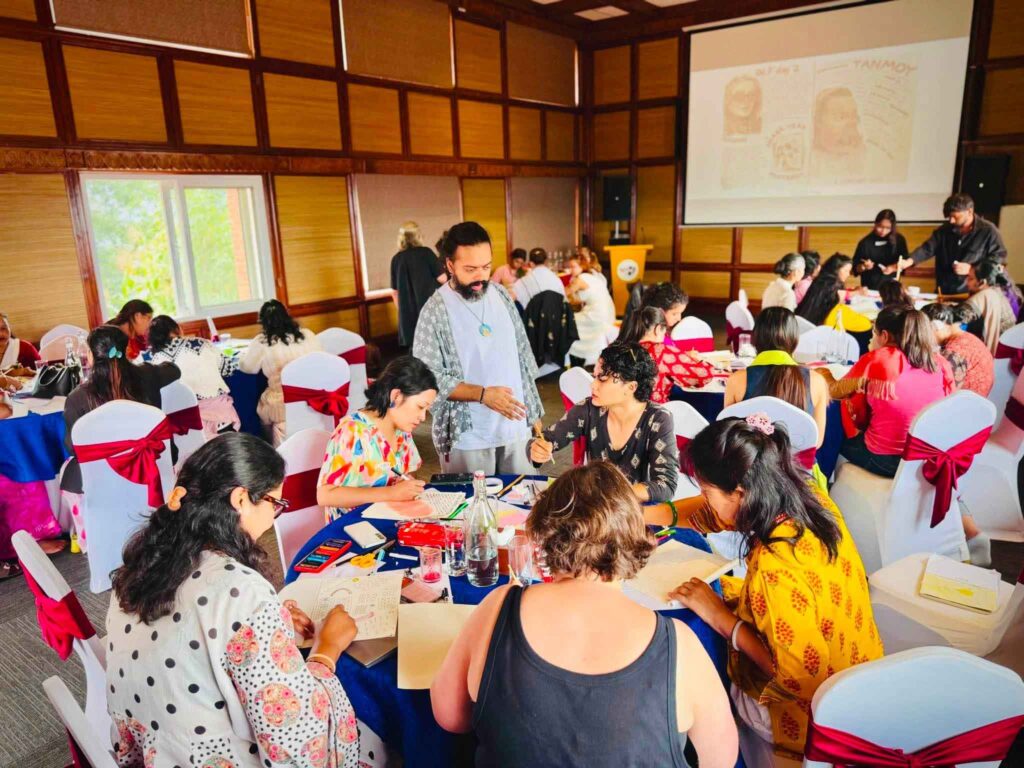
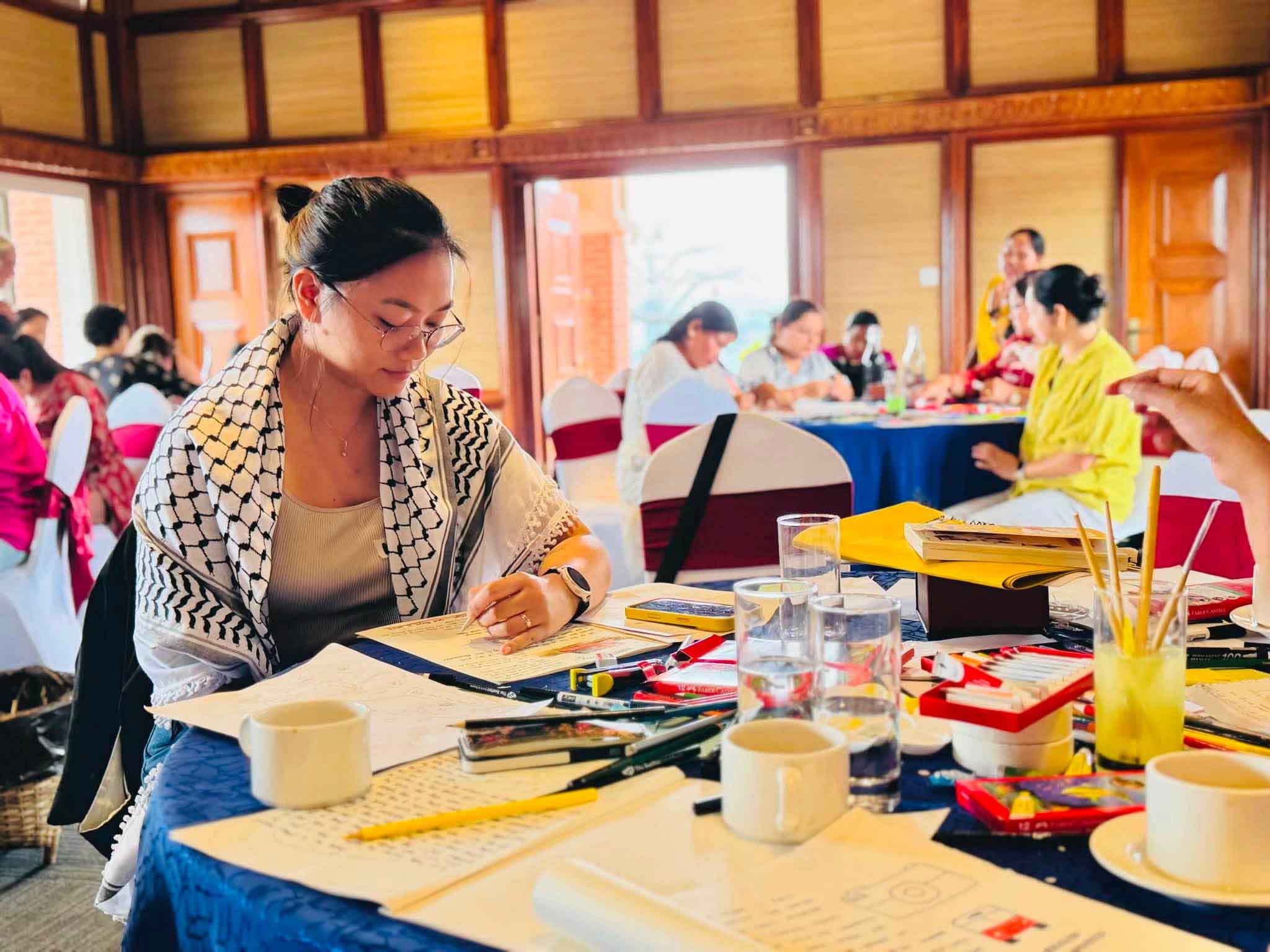
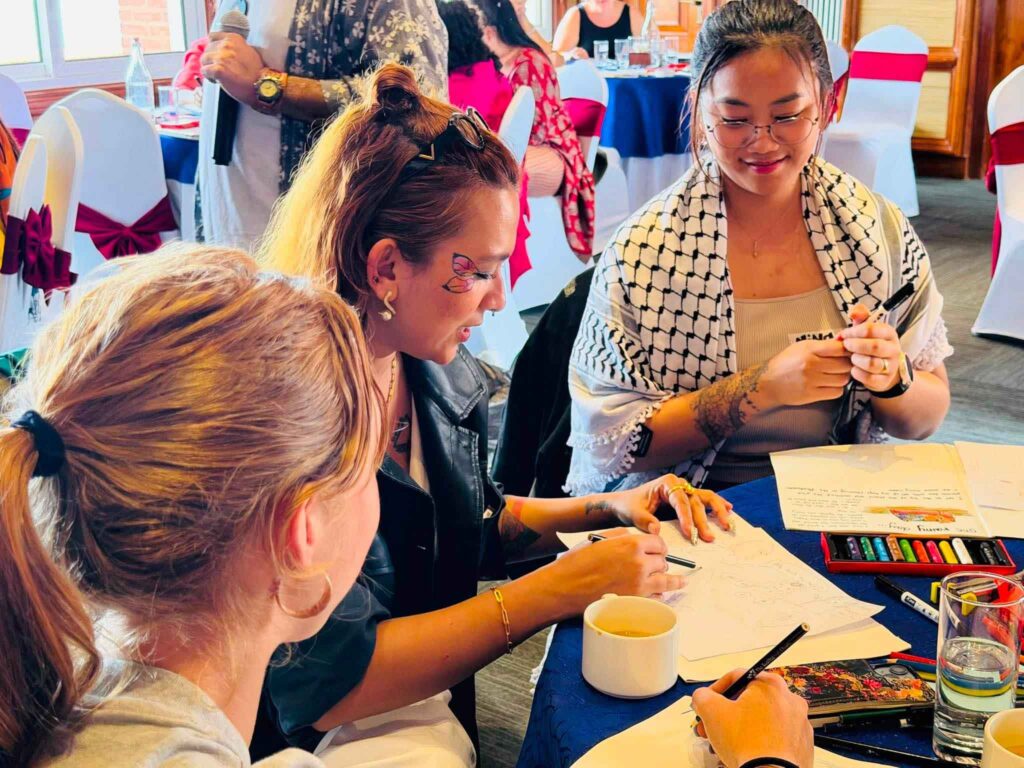
We usually introduce ourselves through titles, achievements and statistics. I wanted to know what would happen if we did it with pictures and stories instead. Over four mornings, each participant was asked to make a small handmade comic book, part graphic memoir and part reflection on her leadership journey. No drawing experience was needed.

That is an easy sentence to write. It’s much harder to believe when you’re staring at a blank page and someone has asked you to fill eight of them with sequential visual stories in four sessions. So my real job wasn’t to teach drawing. It was to make the page feel safe.

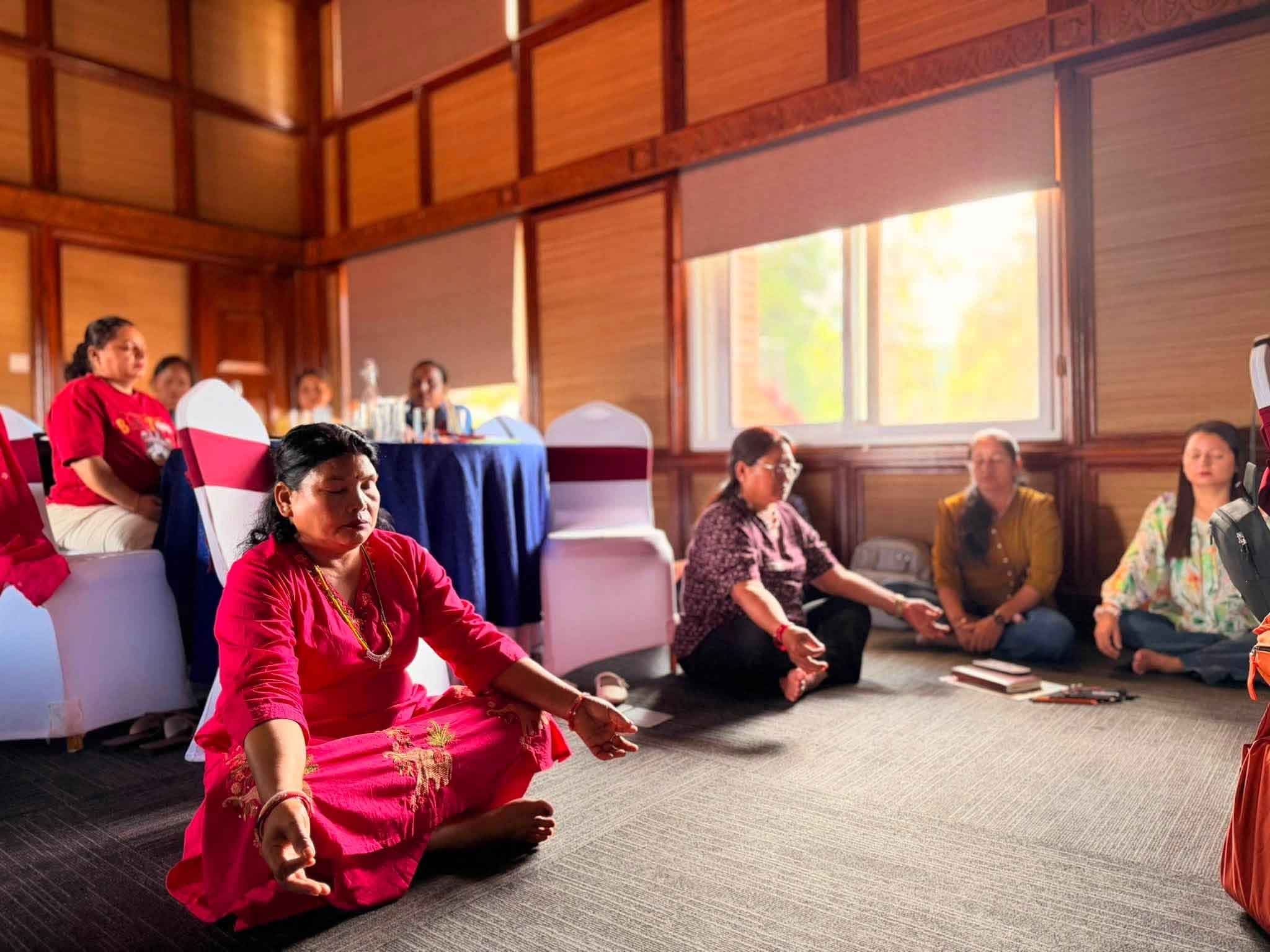
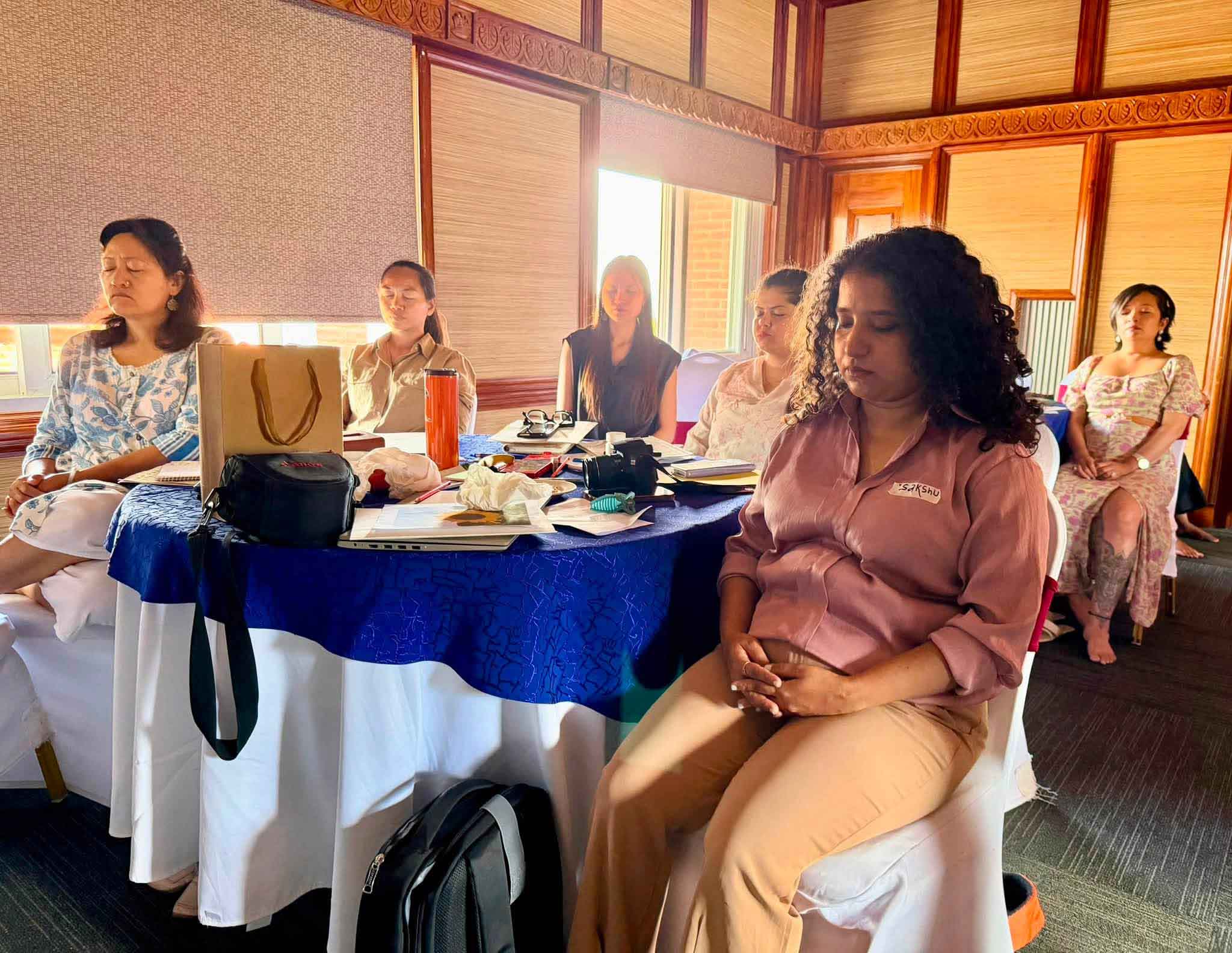
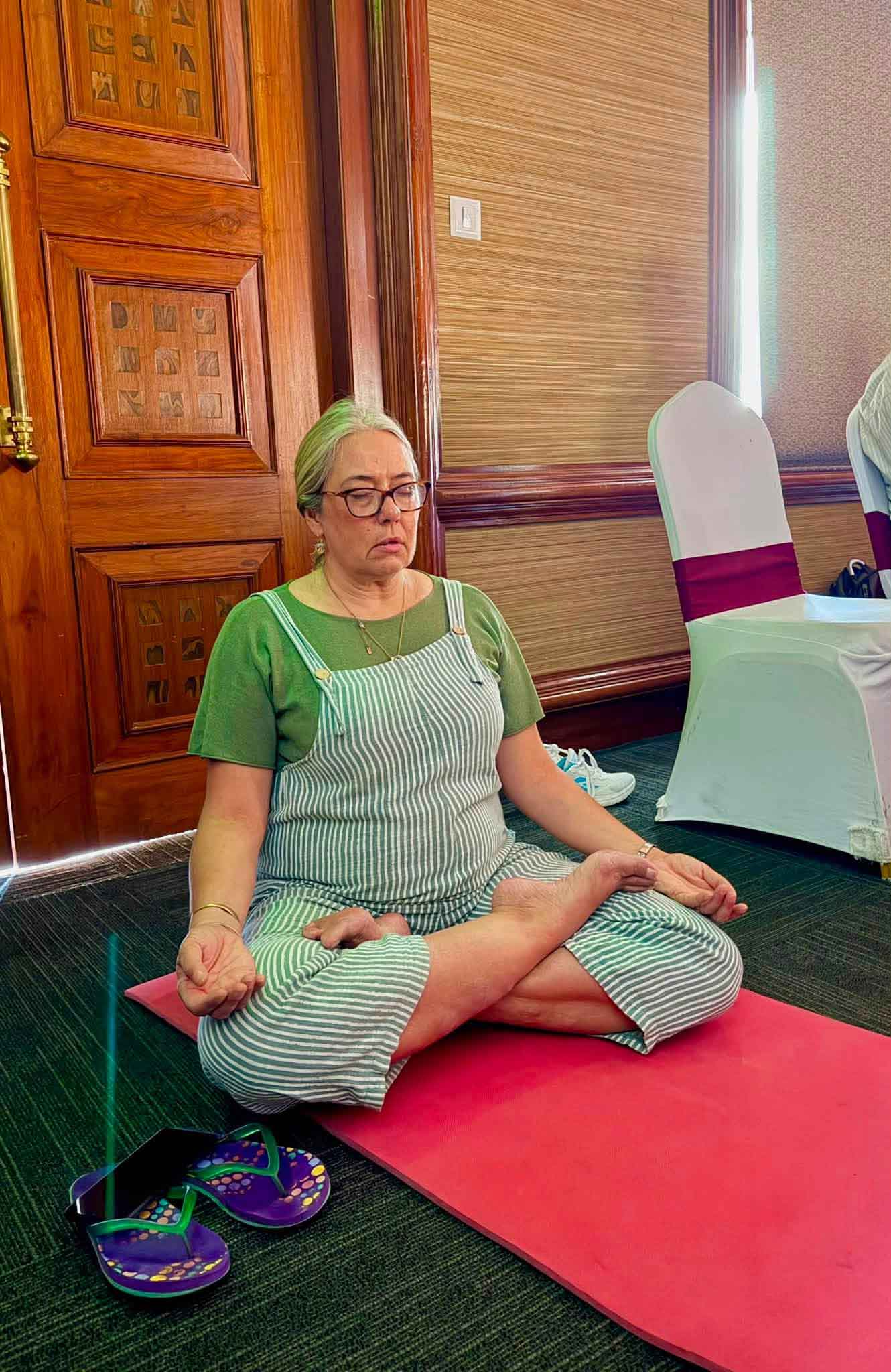
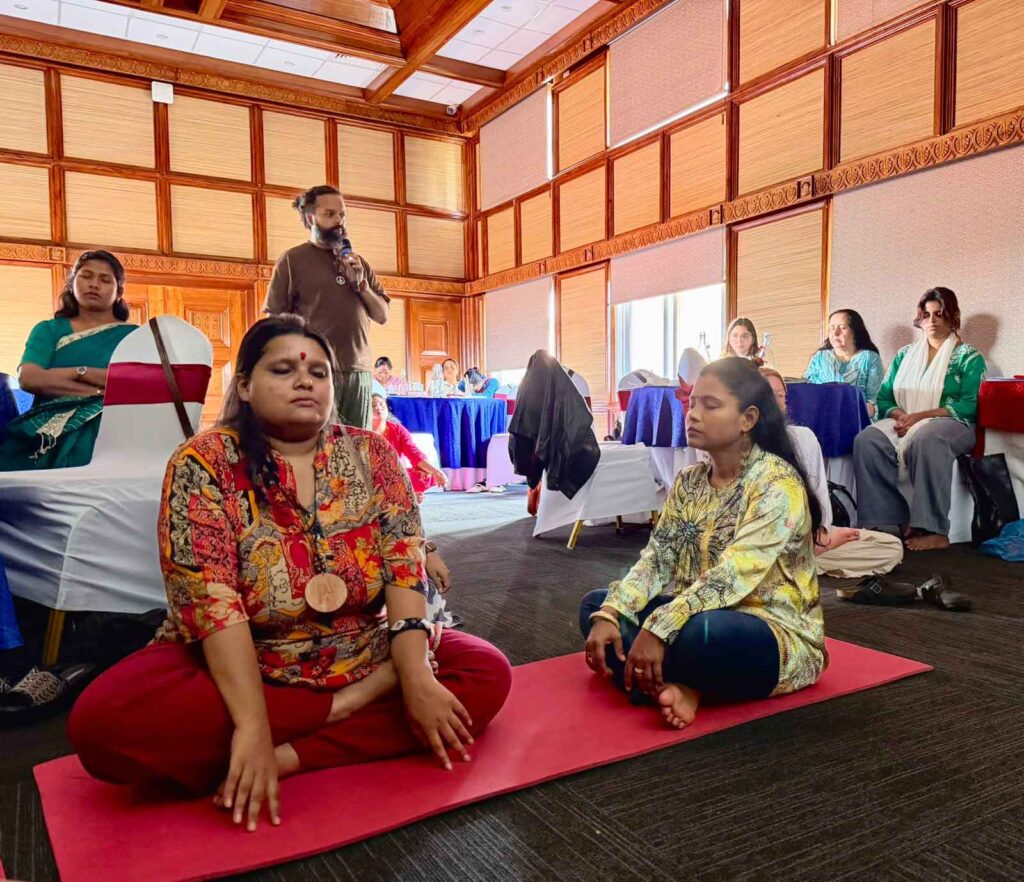
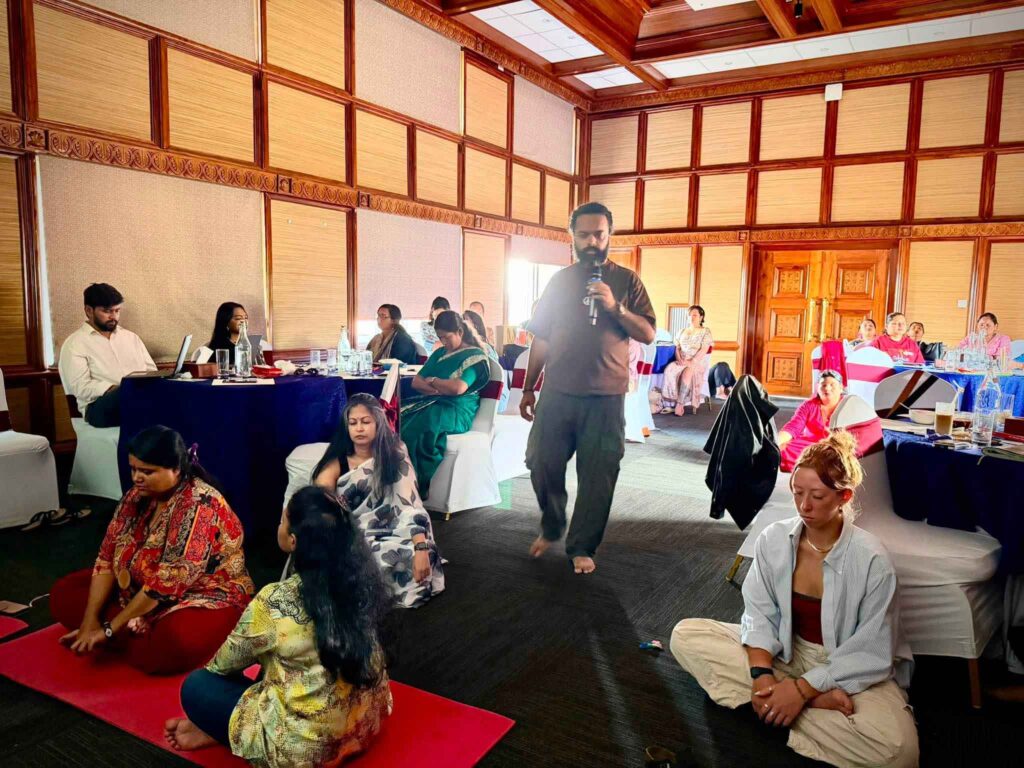
Every session began with fifteen minutes of guided meditation. We breathed, stretched, listened to music and let our hands move across the paper without any plan. Nobody was trying to make a good drawing.

I didn’t also set out to run a trauma-healing workshop. But when you ask people to draw where they come from and what they carry, the stories that surface are often heavy. We were just slowing down before we started.

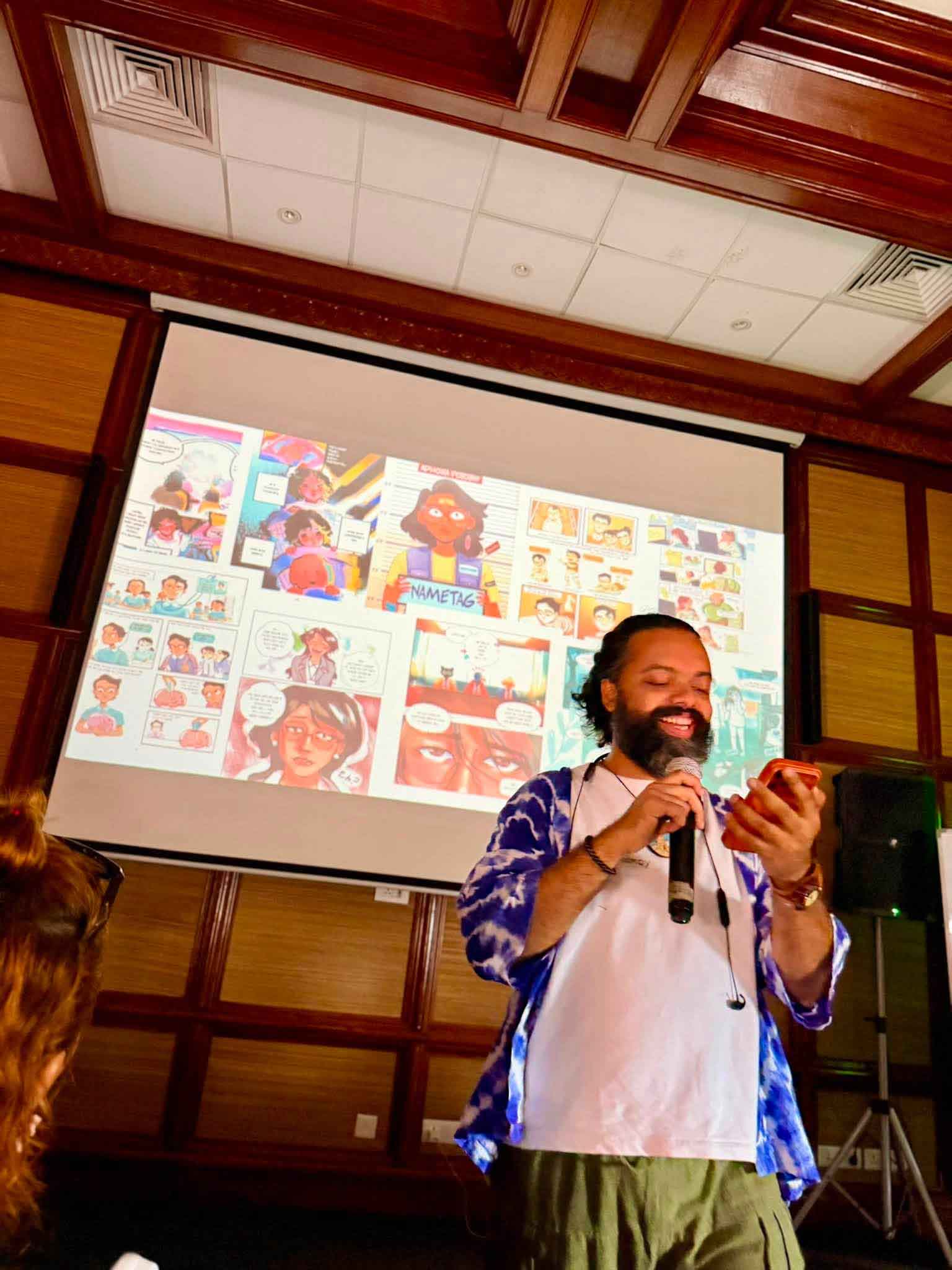
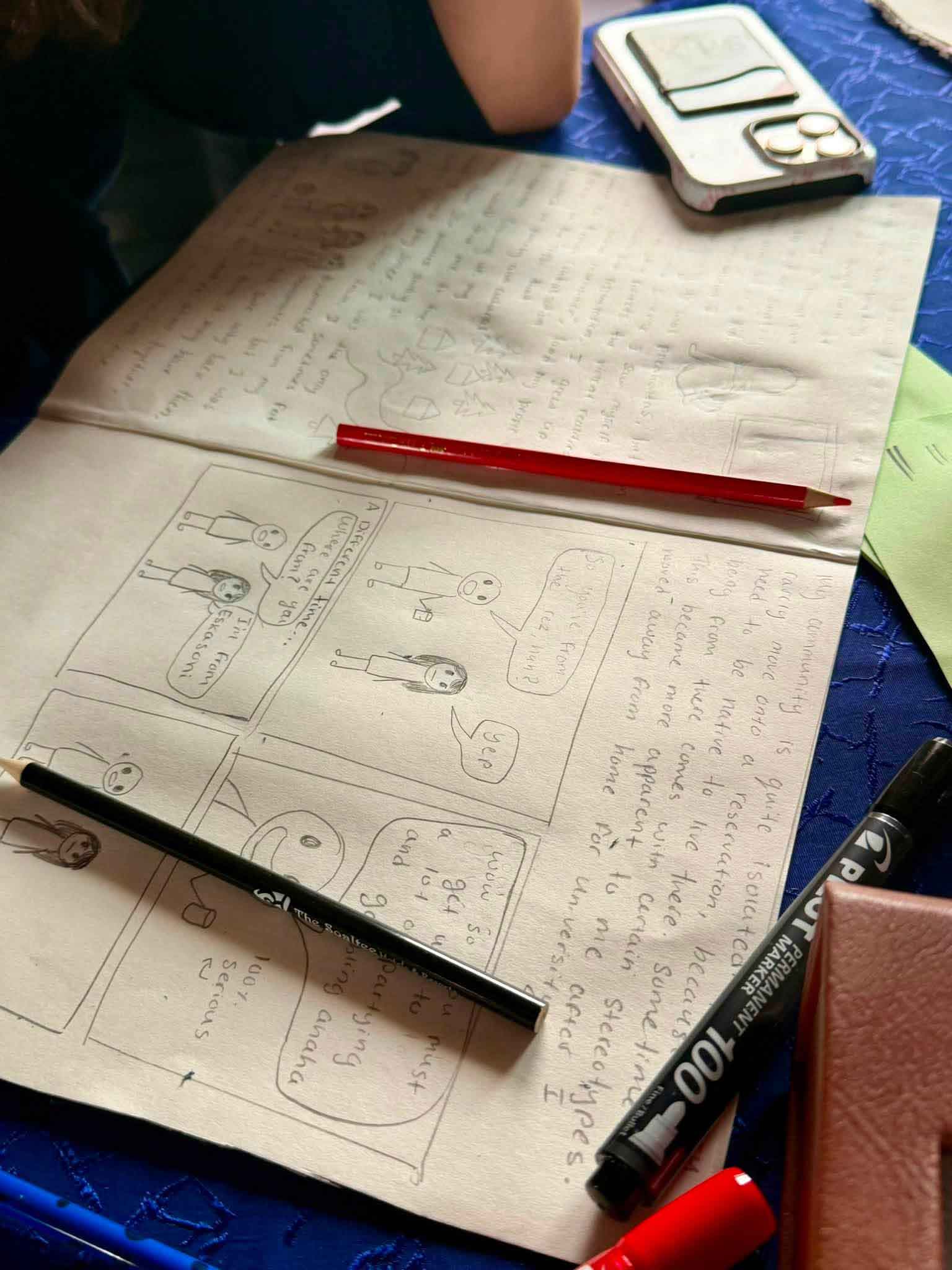
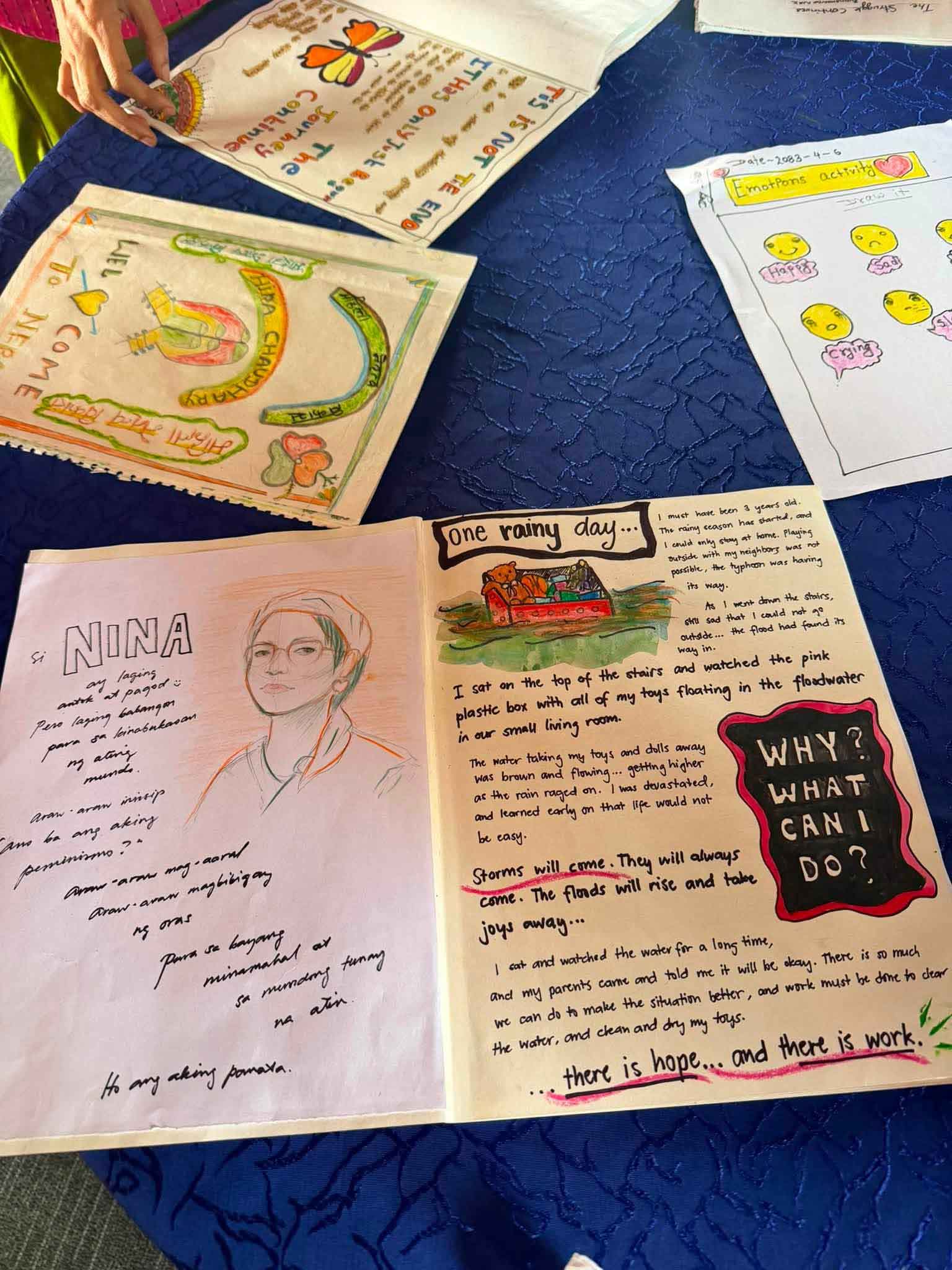
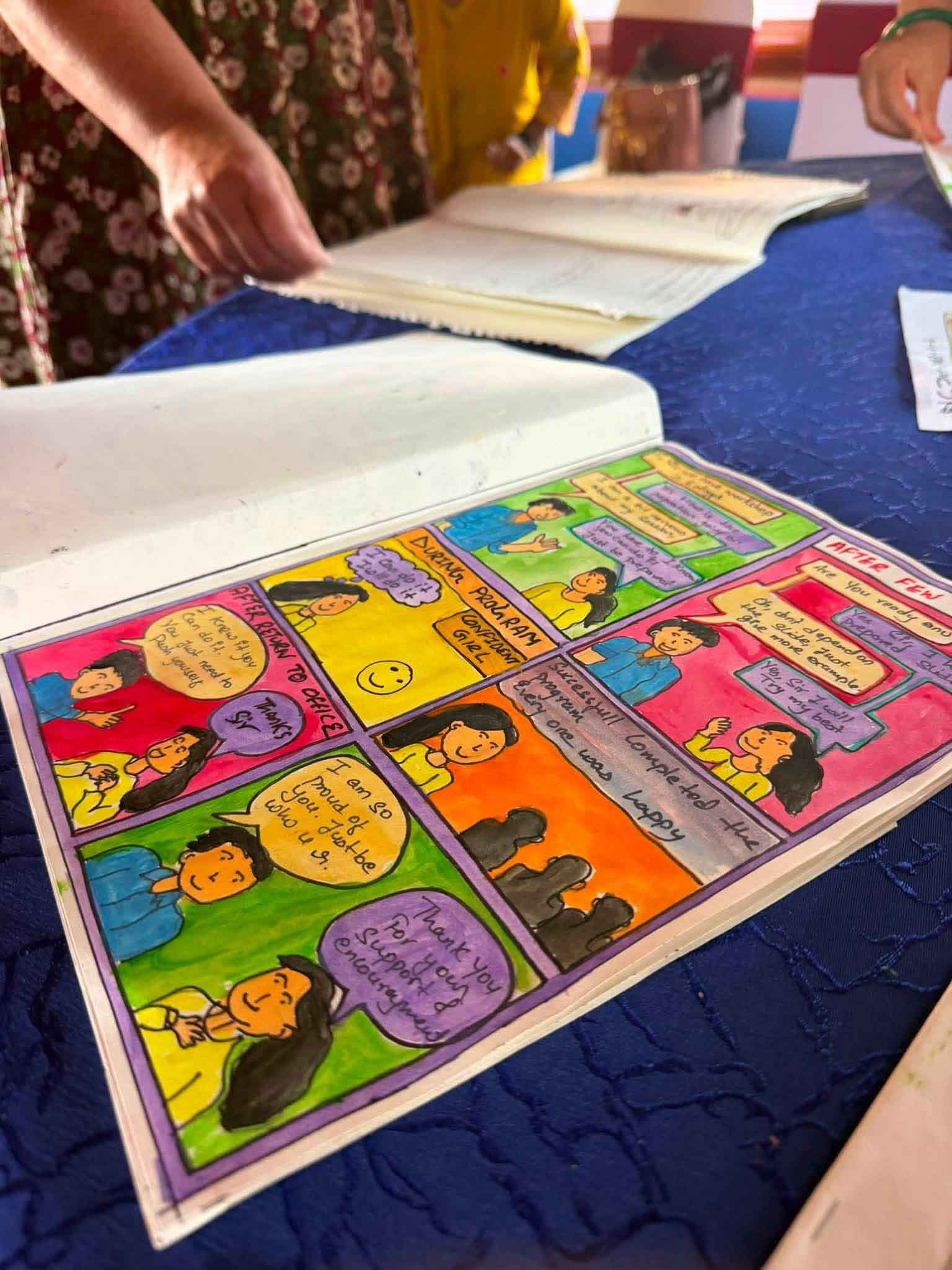
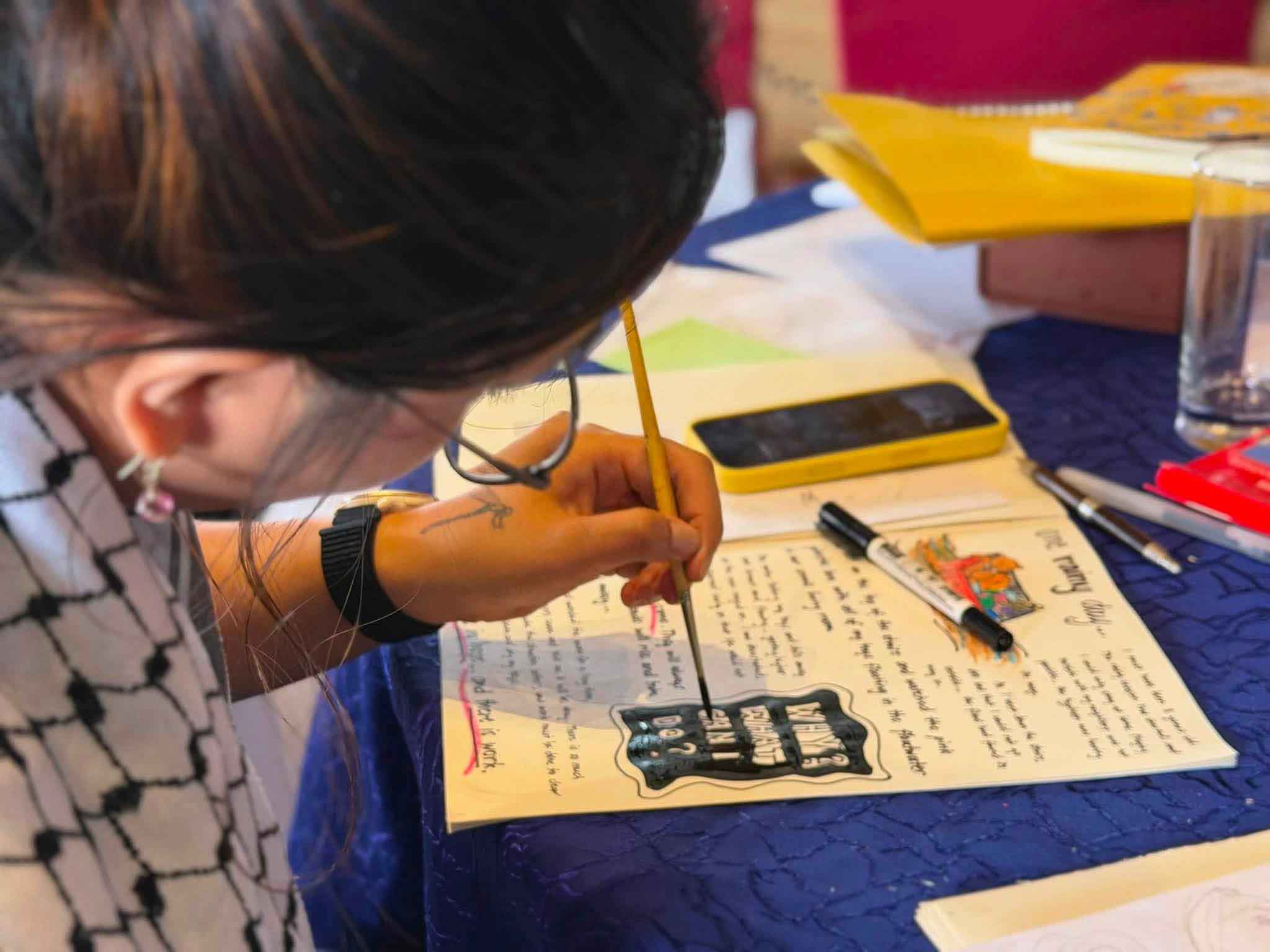
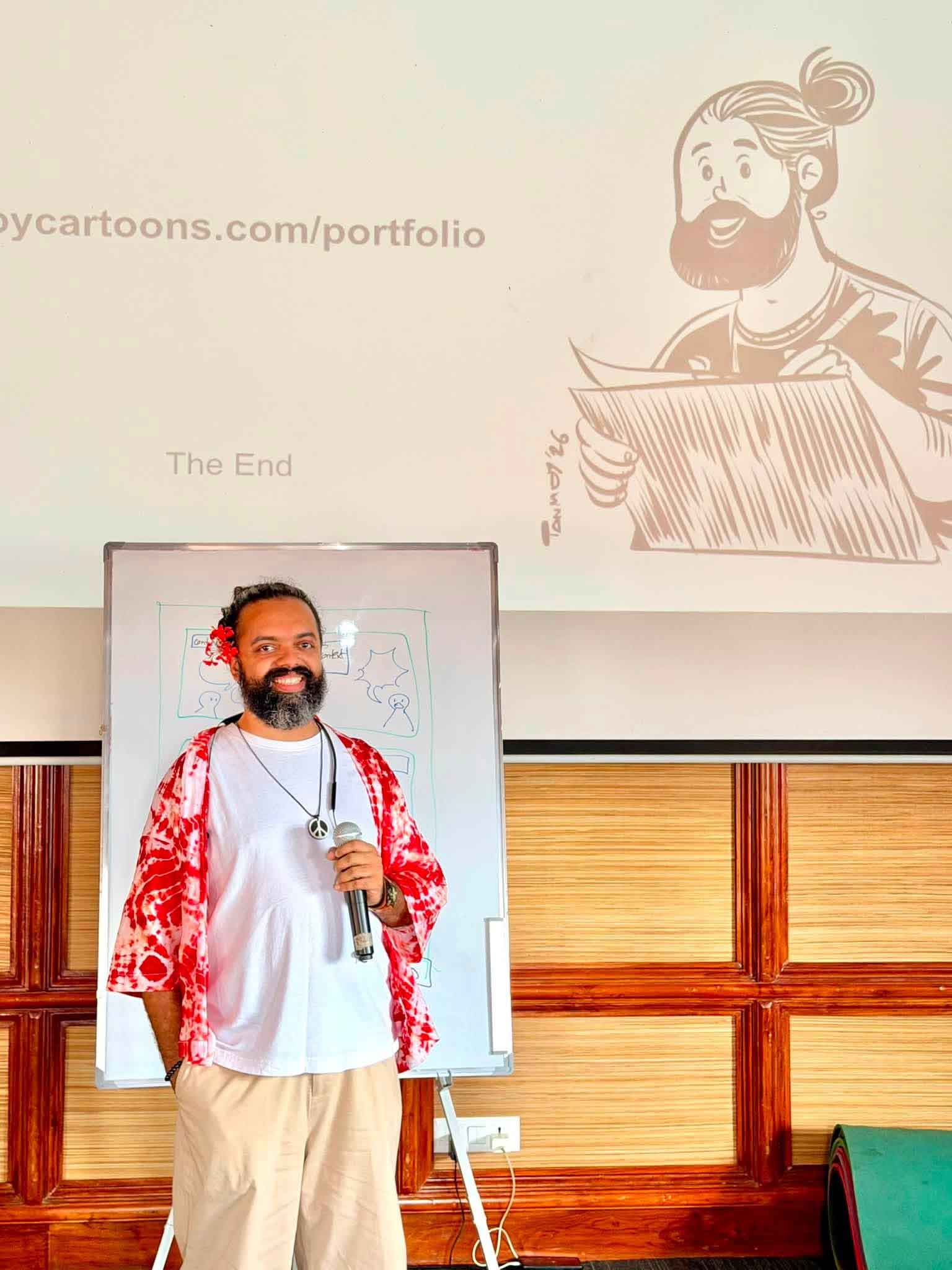
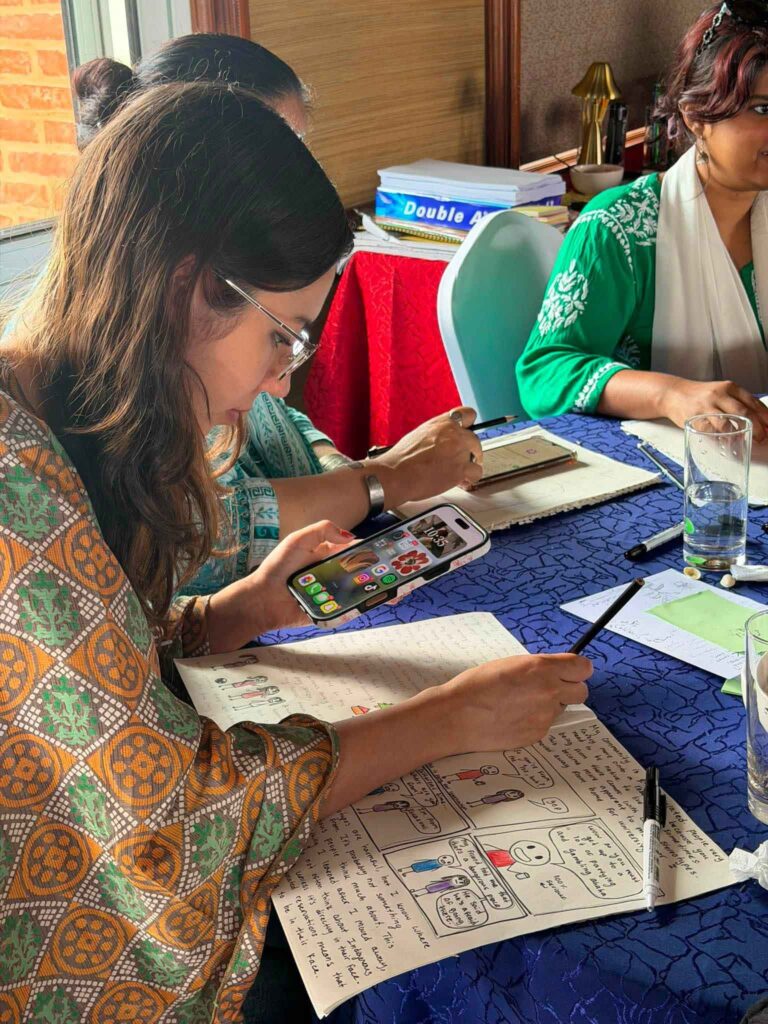
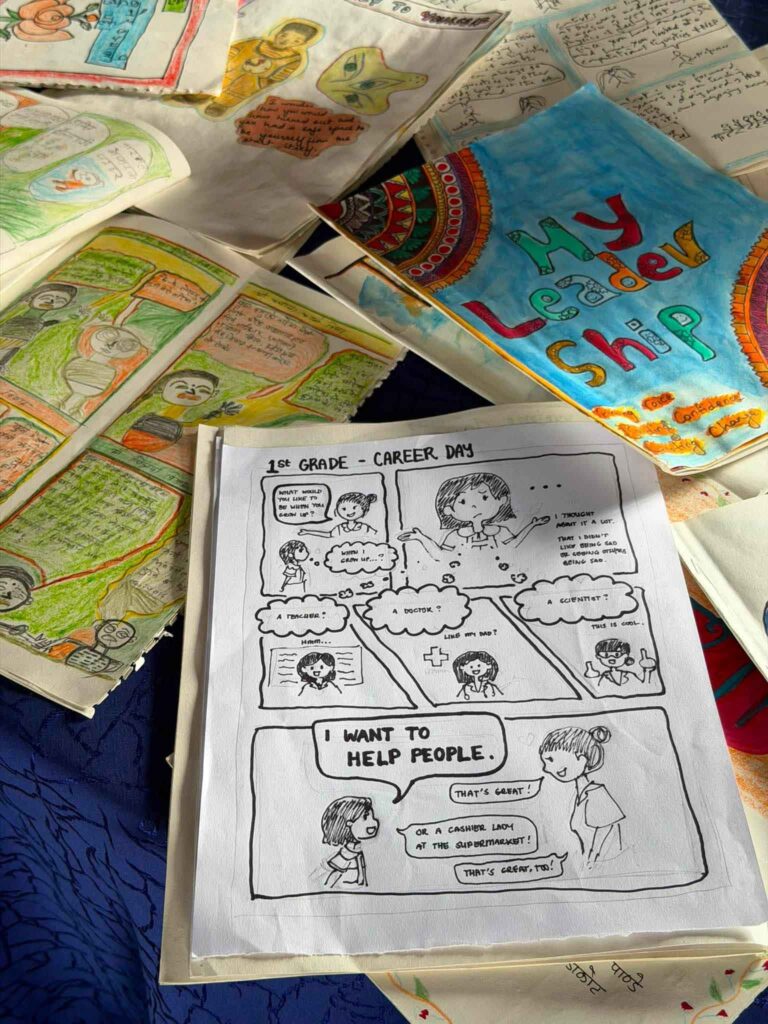
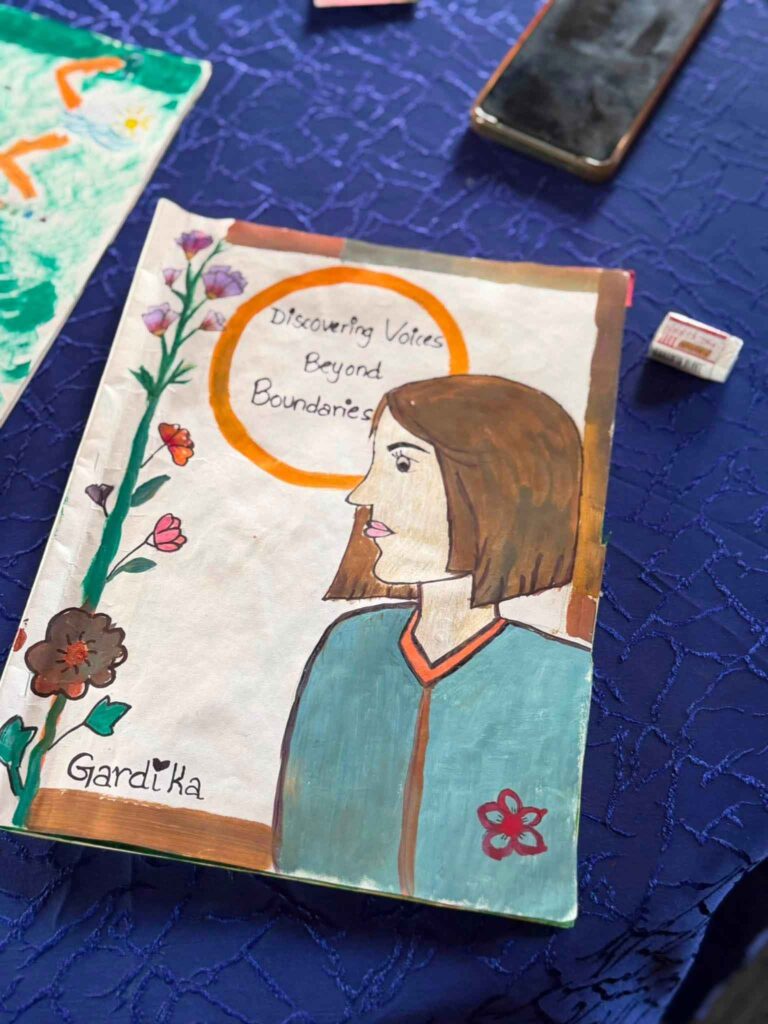
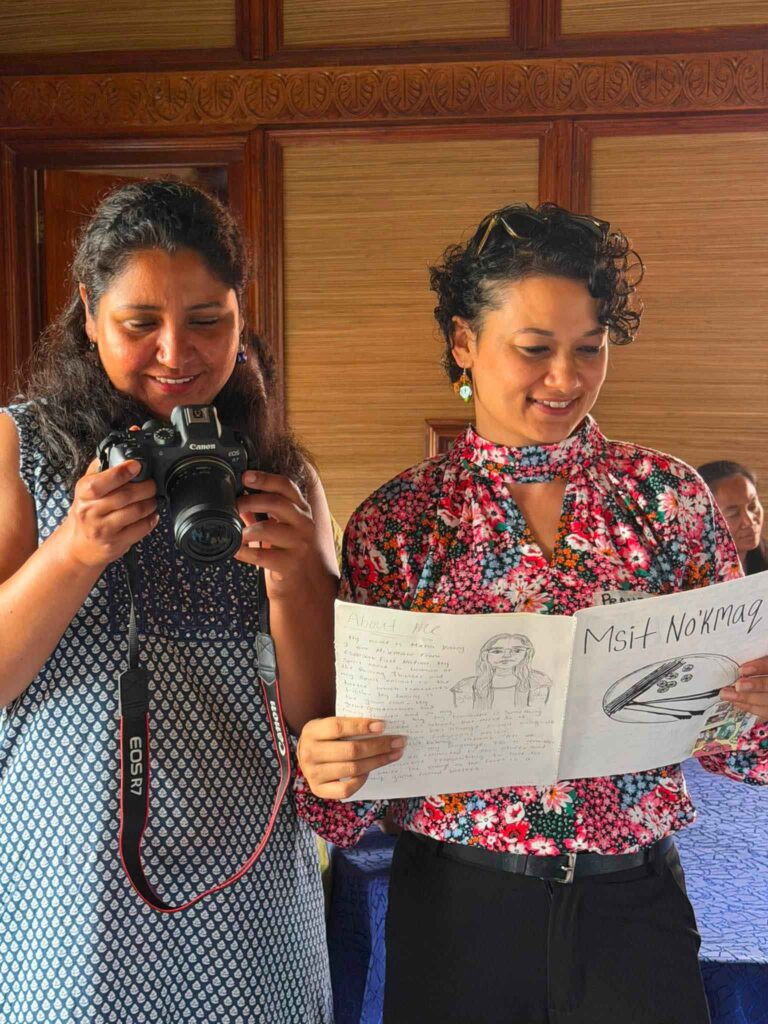
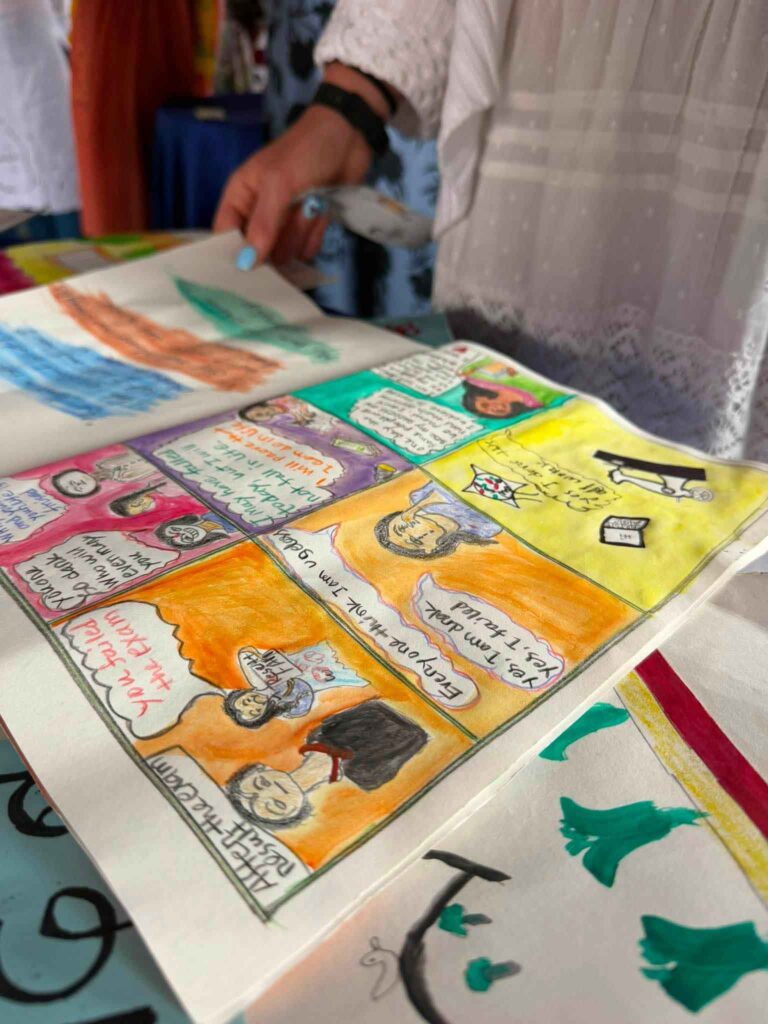
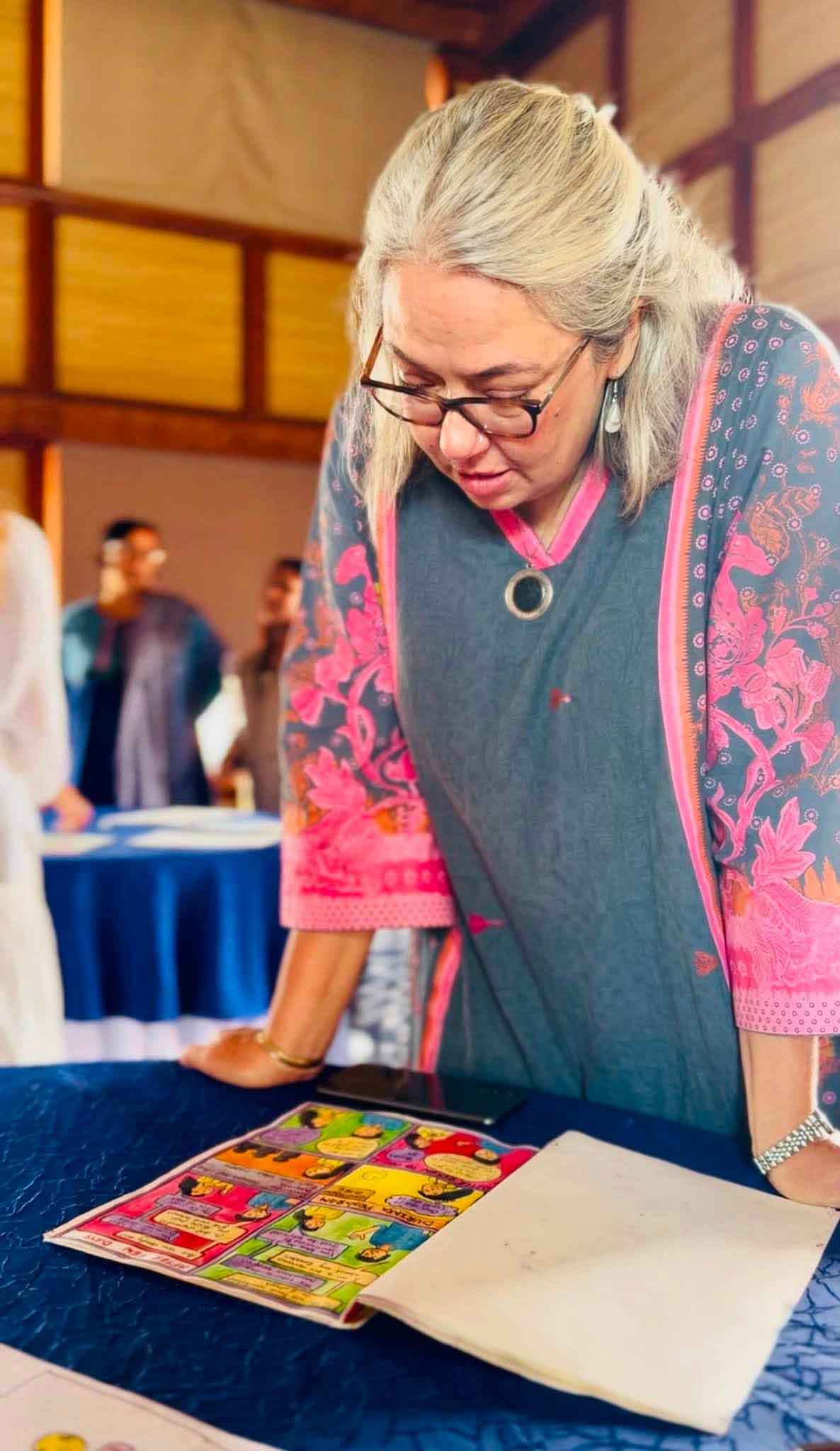
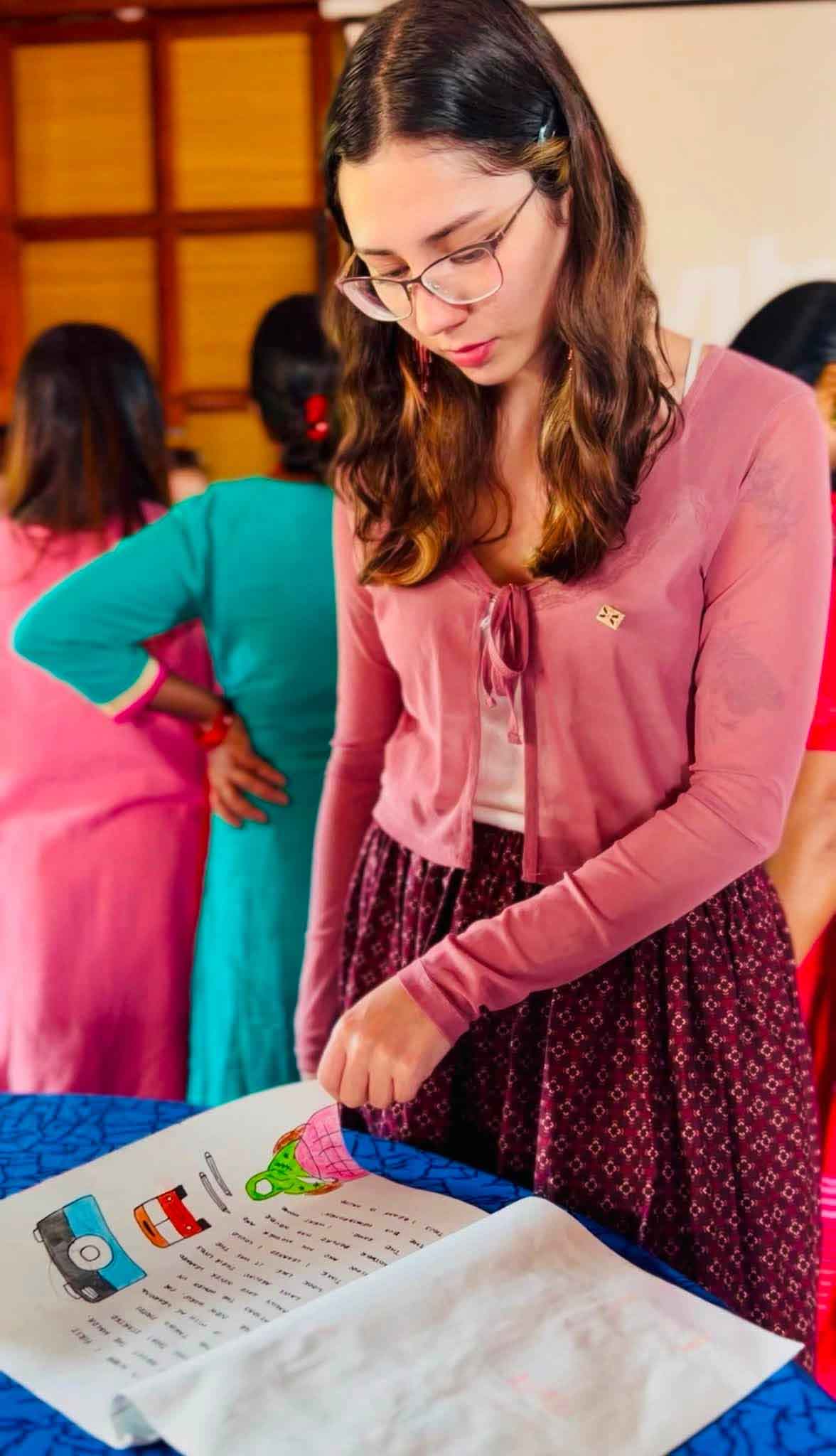
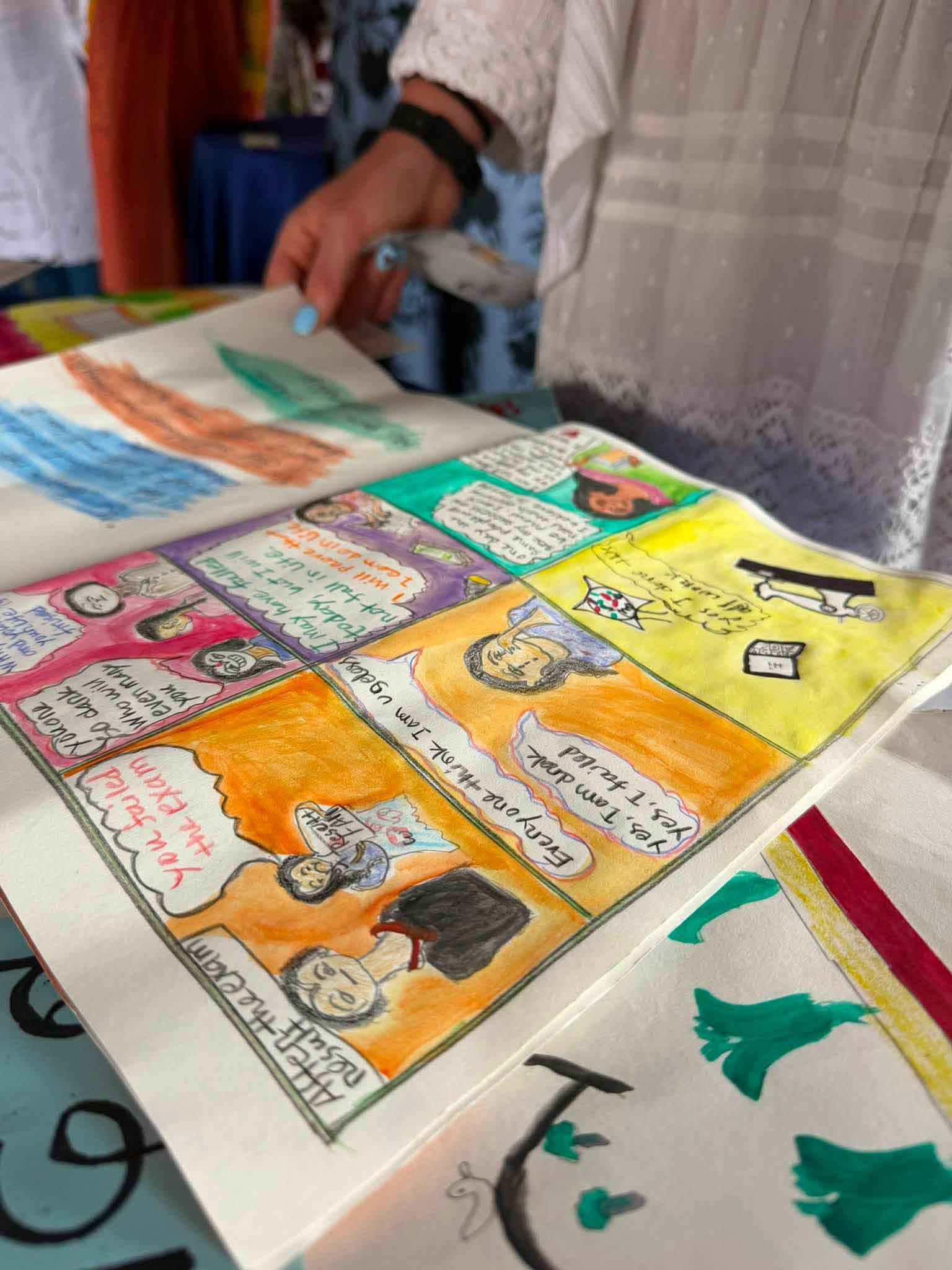
We looked at pages from one of my graphic narratives and a watercolor travel diary, so everyone could see what a story looks like on paper. I gave them a simple eight-page map: a cover with a title, an “About Me” page, and then a back-and-forth between images and words. Some people made panel-based comics. Others went for something closer to a graphic memoir. Nobody had to choose the right way.

We explored what happens when pictures and words meet. Sometimes they explain each other, sometimes they contradict each other , and sometimes,when they work just right, they say something neither could say alone.

Then came the tools. Speech bubbles are for the things we say. Thought bubbles are for the things we want to say but don’t. Jagged shout bubbles are for the times our emotions won’t stay inside. We played with panels and the thin gaps between them, and found that a page doesn’t have to behave. You can stretch it, squeeze it, slice it up however you like.

With those tools, we turned real conversations into comics. First, I asked everyone to remember a conversation that had pushed their younger selves toward feminism. Later, I asked them to draw and write about something they had witnessed that week, when someone stood beside someone else.

On the final morning, we added lettering, borders and the little details that make a page feel finished.

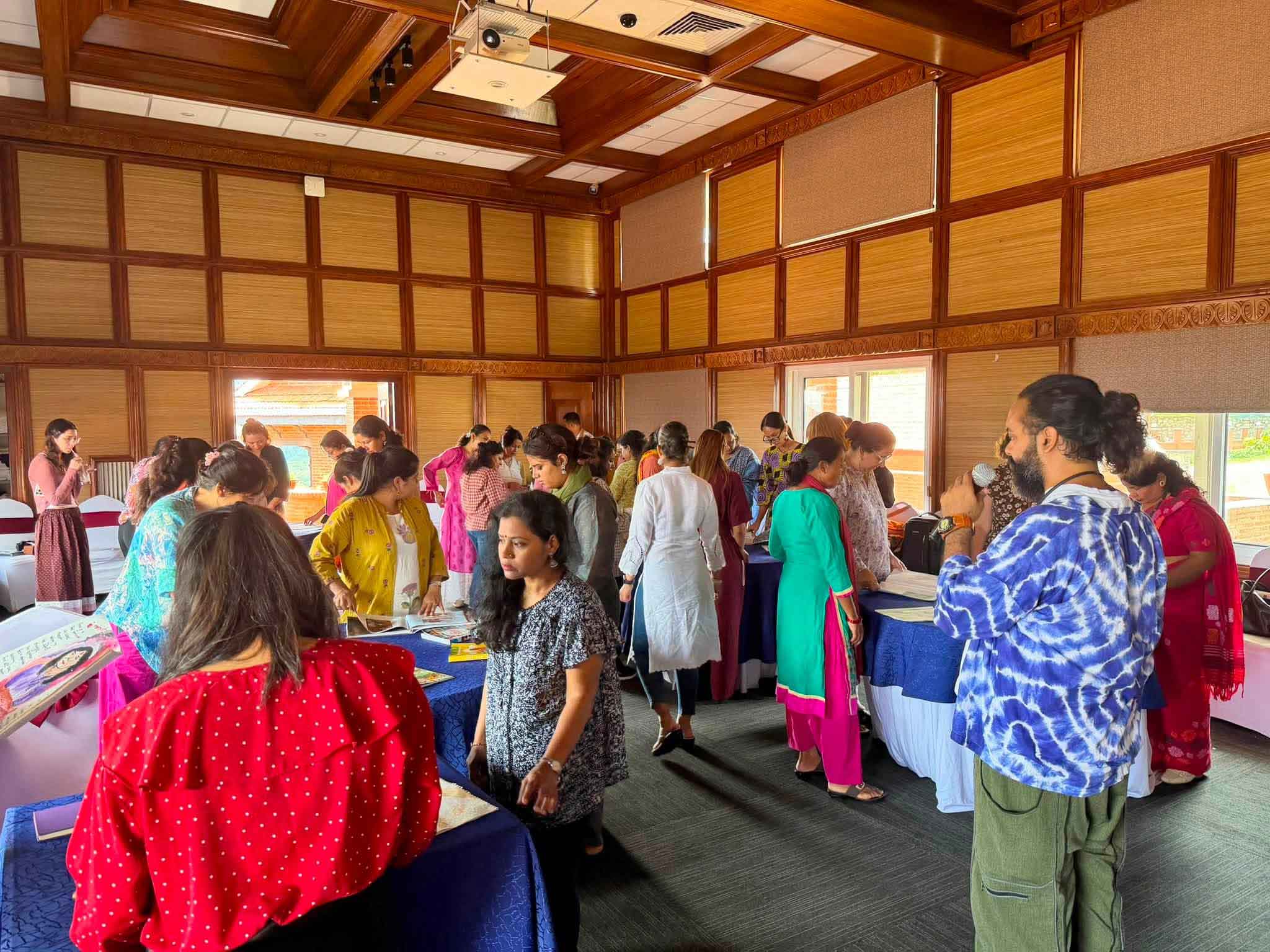
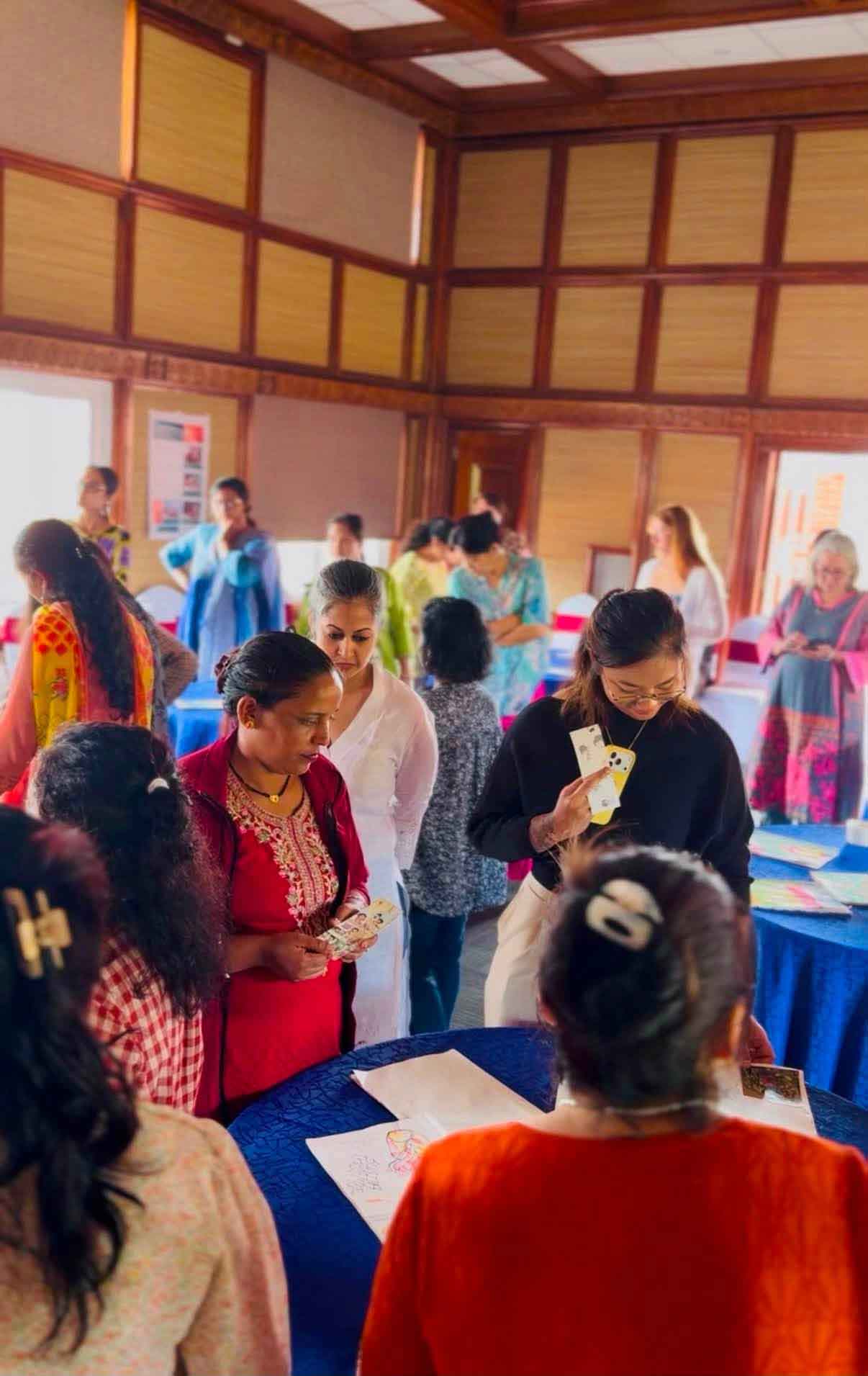
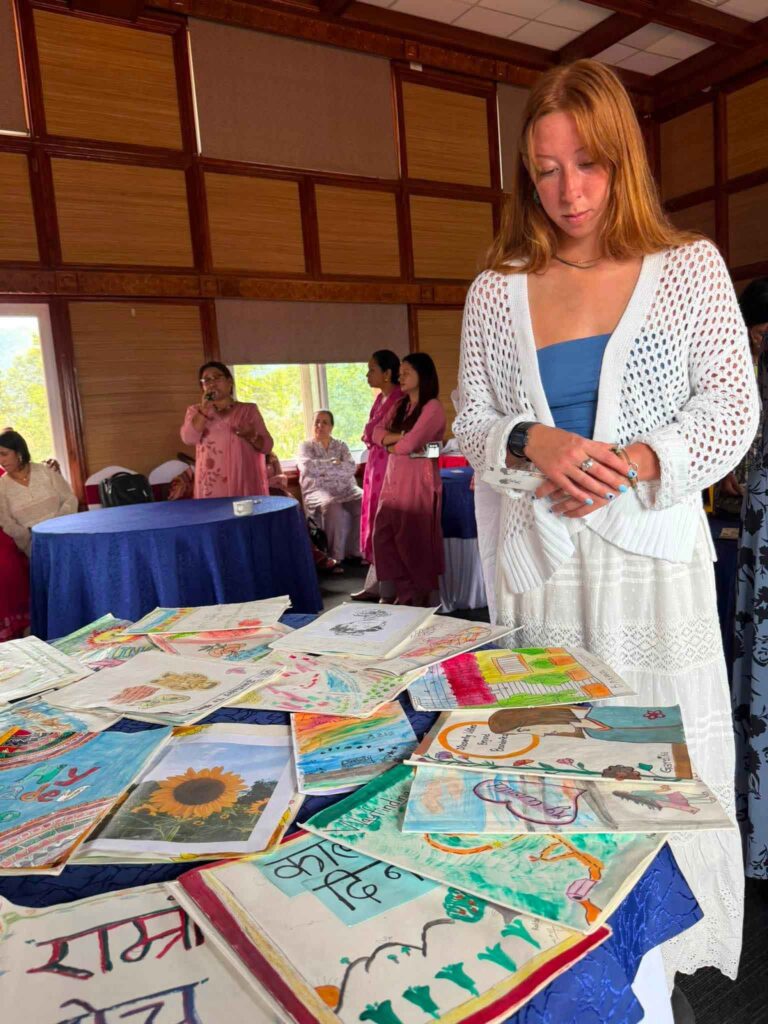
And then, suddenly, our tables weren’t tables anymore.

They were a gallery.

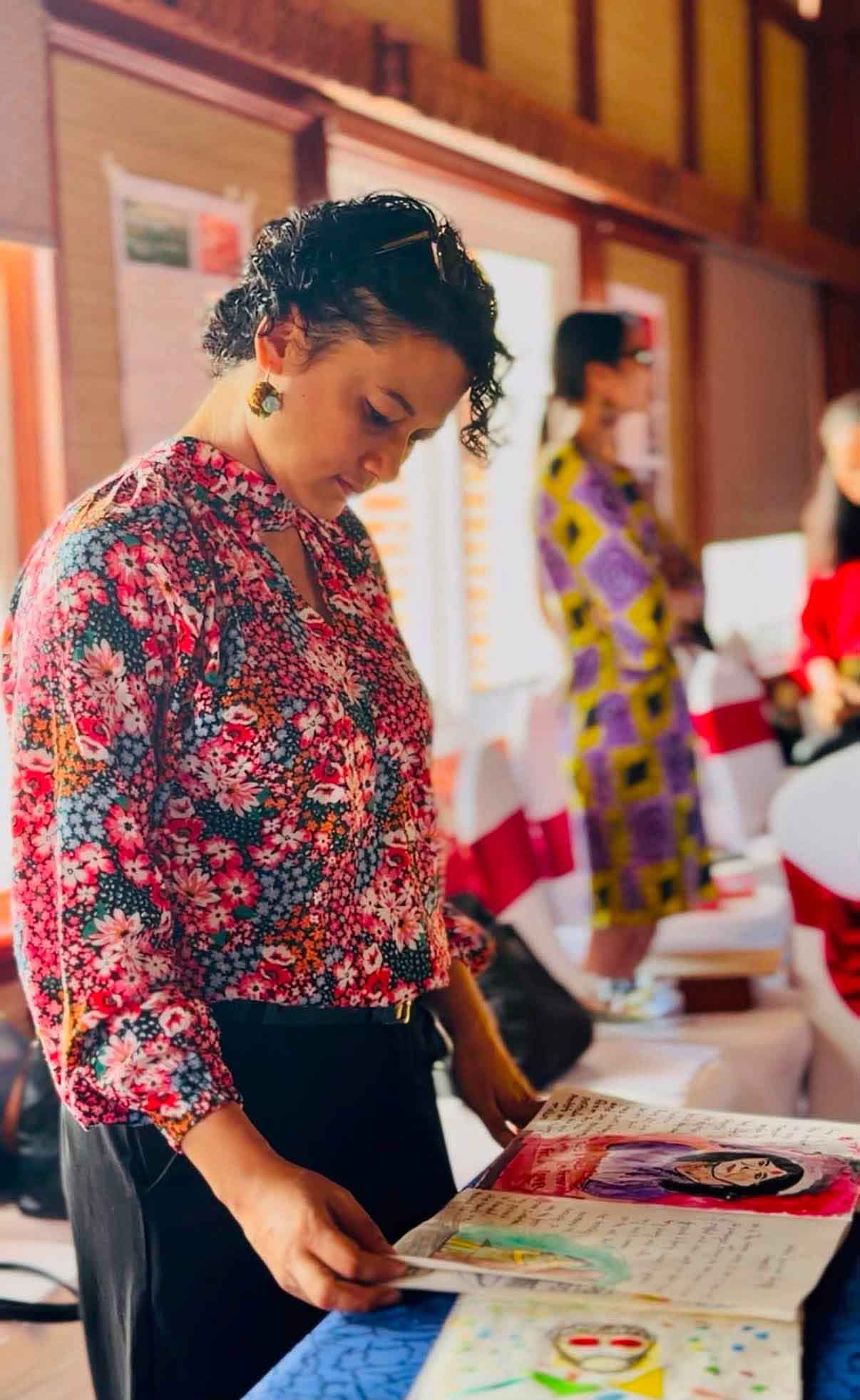
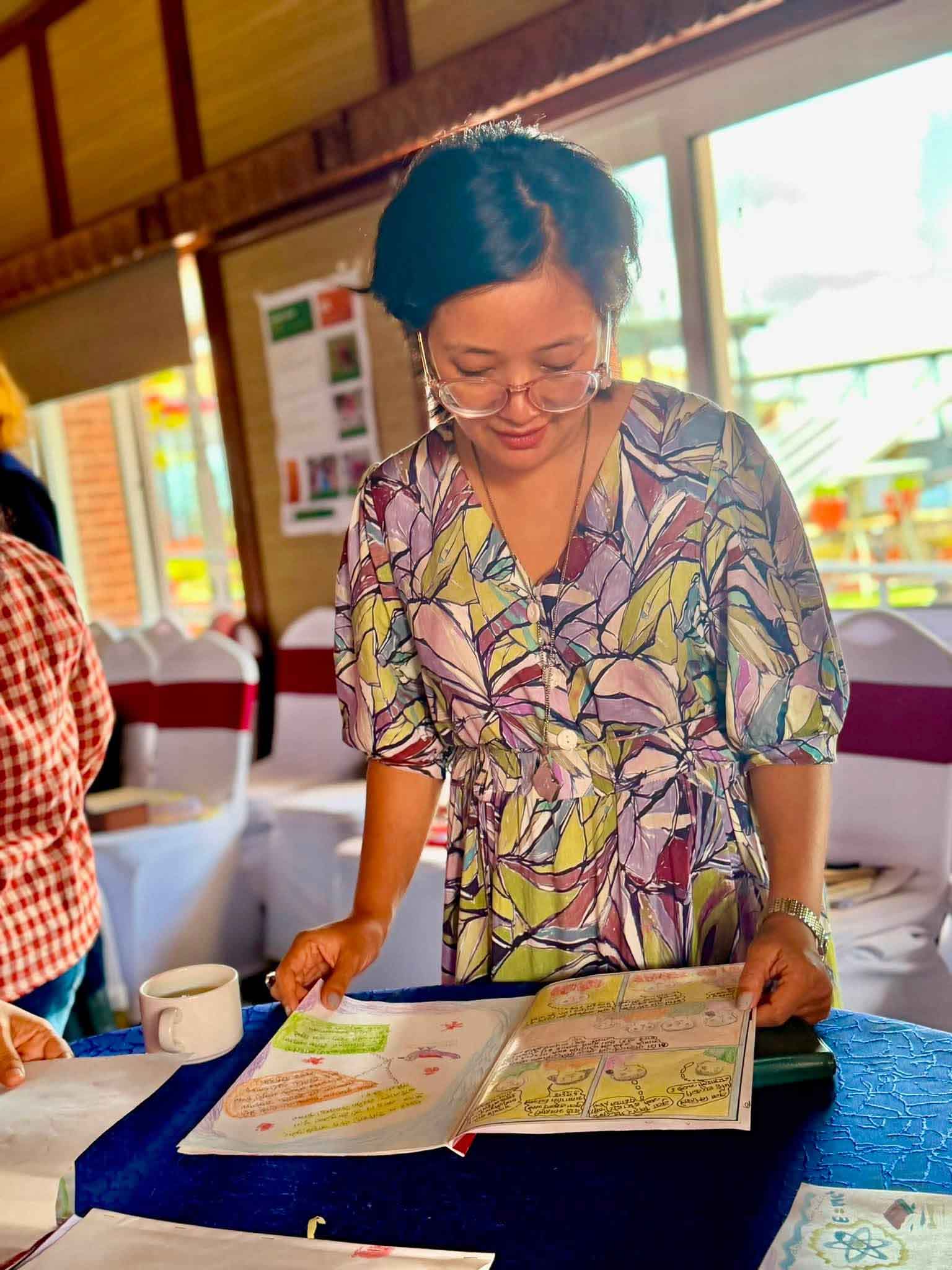
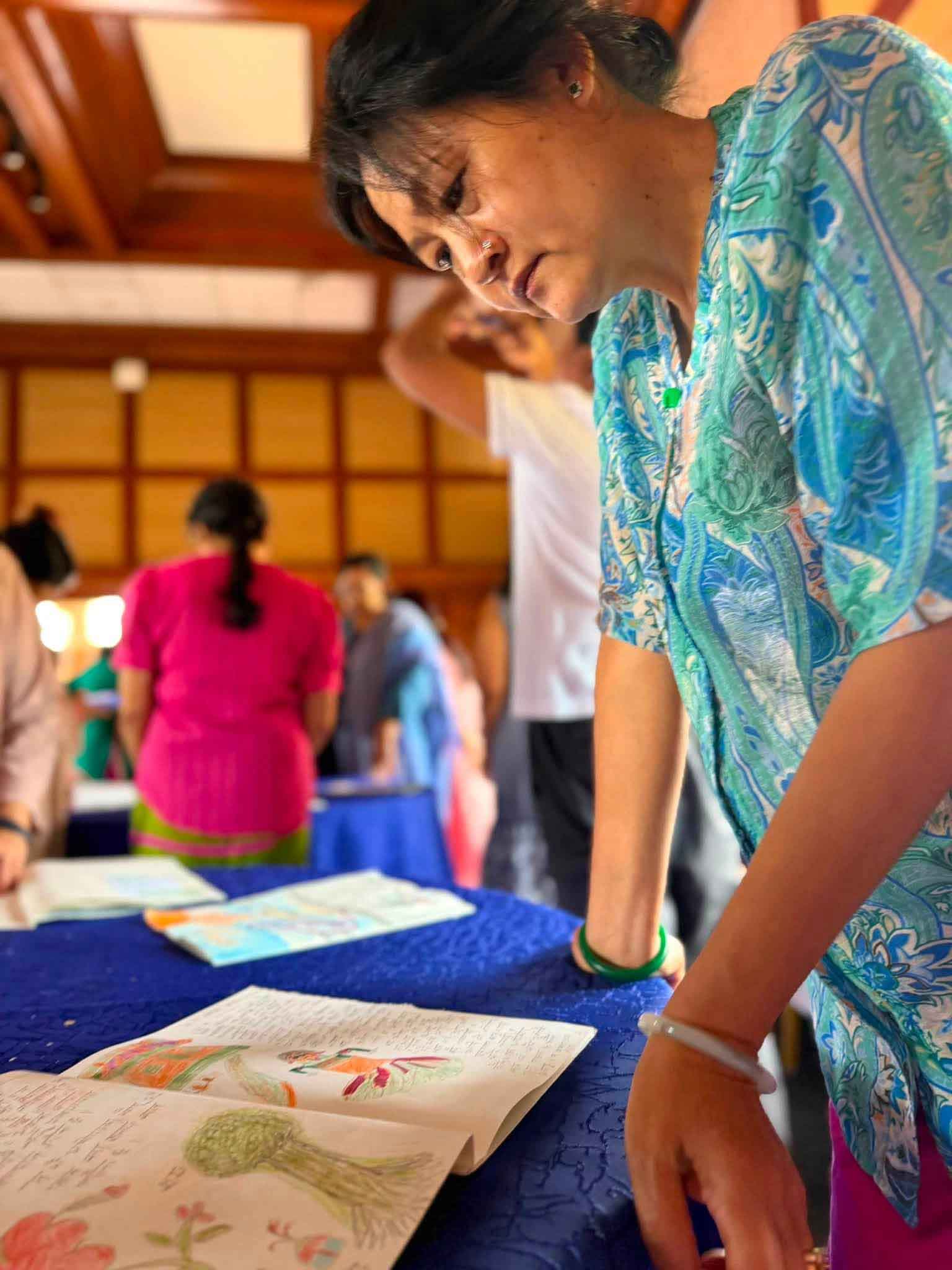
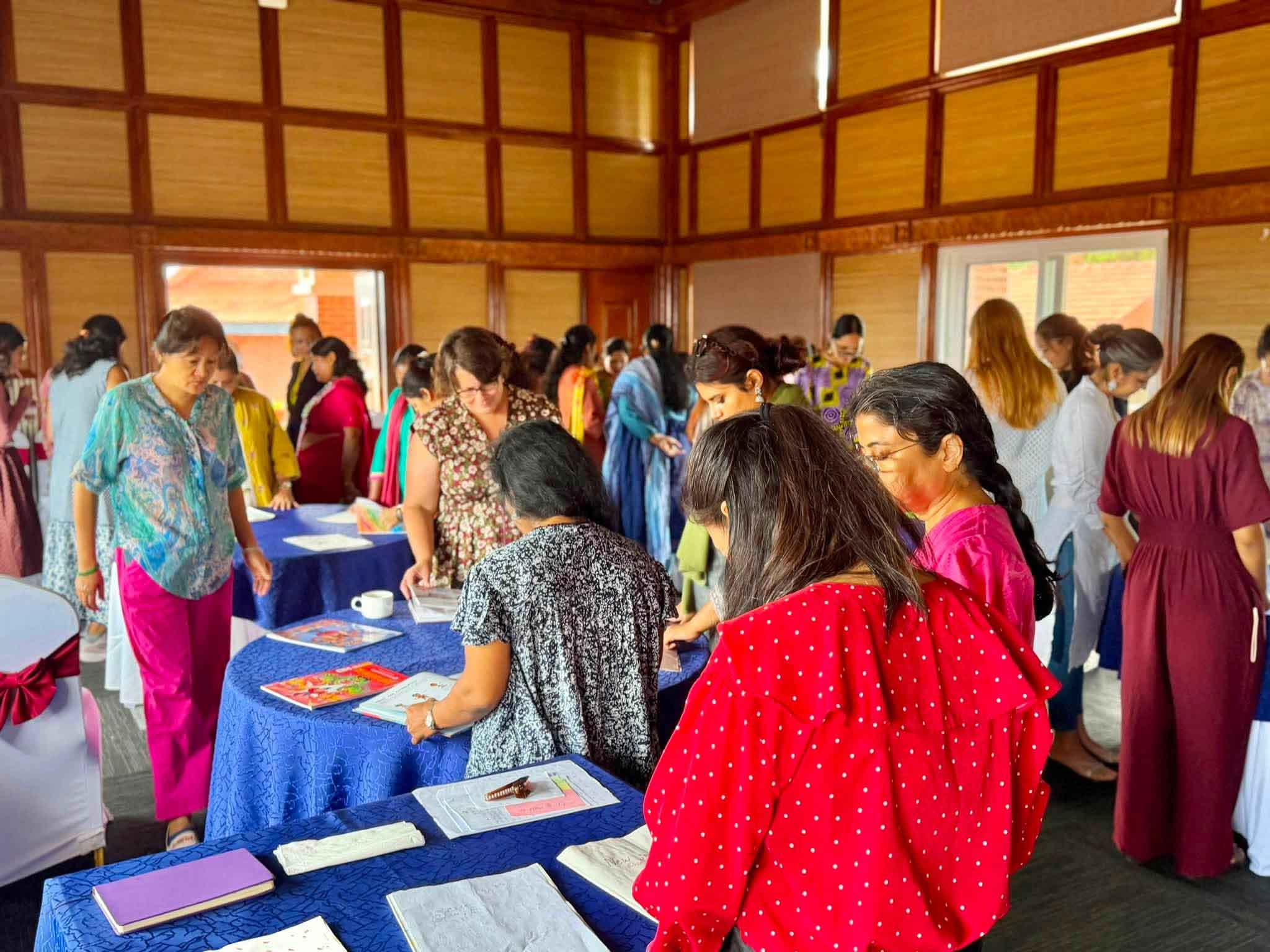
Everyone cleared their tables and turned them into a display. Everyone walked from comics to journal, reading quietly and leaving small notes of encouragement.

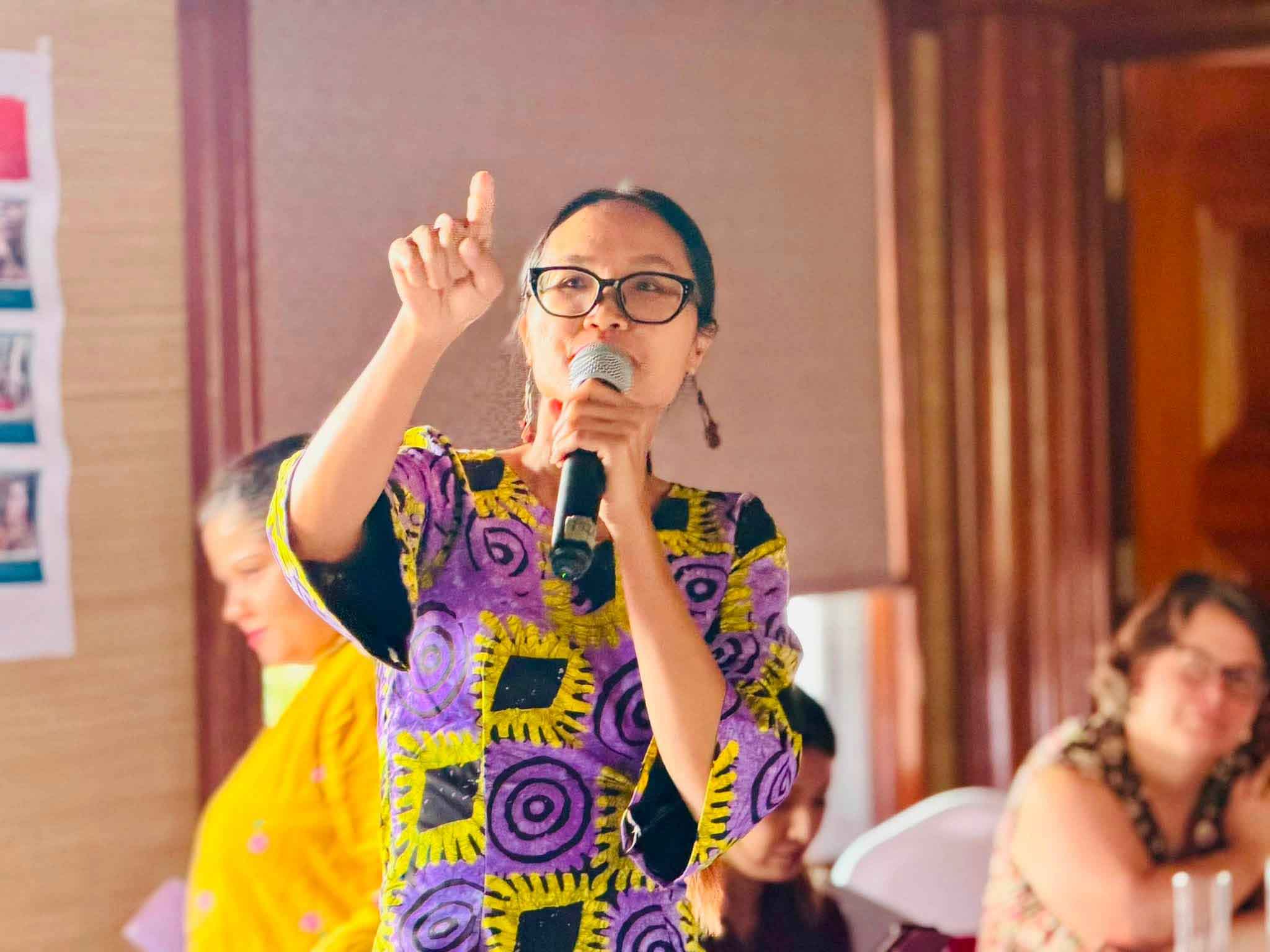
By the end, the tables were covered with graphic memoirs, comics and fragments of people’s lives. Some chose to share the stories and identities behind their pages. Others kept them private. Both were welcome, because when you draw your own story, you decide how much of it the world gets to see.

What stayed with me most was how quickly the fear disappeared. People who said “I can’t draw” on the first morning were pointing at each other’s pages by the last day and asking, “Tell me about this one.” The stick figure turned out not to matter. A story that might never have been told in public now existed on paper, in someone’s own hand.

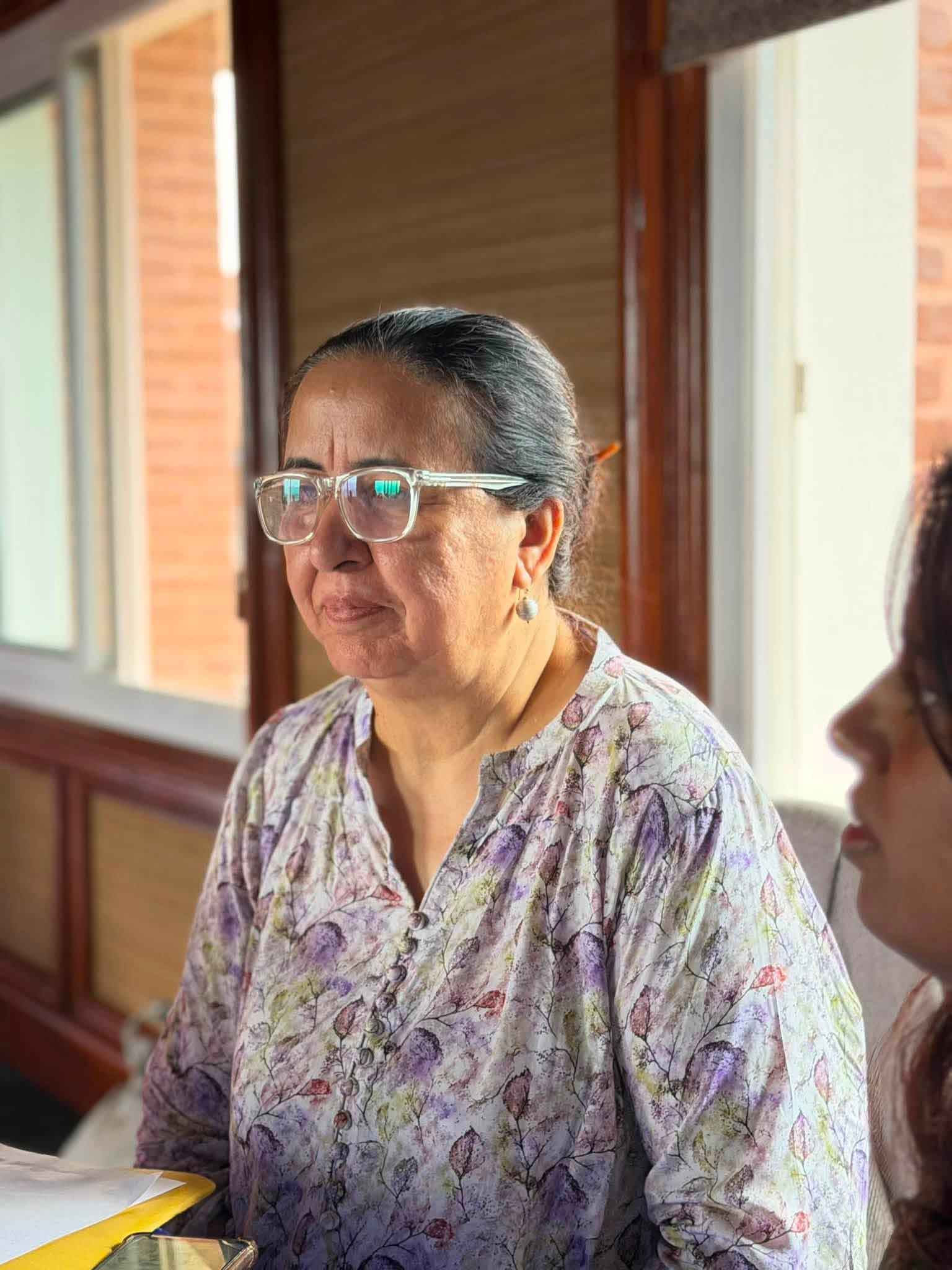
I also have to mention the room itself. I was one of only three men among around forty women. It gave me a small glimpse of what it feels like to move through a space where you’re not the majority. Everyone welcomed me, helped me and made space for me, and I think that’s what good leadership looks like: making sure others feel they belong.


I made friends here.Himaya from the Sisterhood Initiative in Sri Lanka. Rukshanda Naz from Mera Ghar in Pakistan. Nandar from purple feminist collective, Myanmar.Maria Sarkar from Bangladesh, Nina from the Philippines,  Sophon & Hoeung from cambodia and so many others. The Coady team held the whole week together beautifully.This was my first time running this international workshop with adult leaders who had never used drawing to tell their stories. I came to Nepal as the cartoonist and left feeling that I had learned as much as I taught. I'm more convinced than ever that anyone can tell their story visually. A facilitator's job is mostly to hold the door open.Thank you, Coady Institute, for flying me in, trusting me, and giving me four cloudy mornings above the mountains to make something together.
Leave a Reply

Your email address will not be published. Required fields are marked *